Easter in New Orleans: Faith, Finery, and the French Quarter's Most Beloved Spring Tradition
There is a moment on Easter Sunday morning in New Orleans when the city holds two worlds at once. Inside St. Louis Cathedral on Jackson Square, the Archbishop presides over the Mass of the Risen Christ before a congregation that has observed forty days of Lenten sacrifice. Outside, on the sun-washed streets of the French Quarter, the city is already reaching for its finest linen and its most elaborate hat. By noon, the two worlds merge completely — and the result is something you simply cannot find anywhere else in America.
Easter in New Orleans is not a single event. It is a full day of layered celebration, rooted in centuries of Catholic tradition, refracted through the city's irrepressible love of parade, pageantry, and the pleasures of the table. For a city that built its calendar around the liturgical year — where Mardi Gras is not merely a party but the eve of Ash Wednesday, and where the date of Carnival itself shifts each year according to when Easter falls — this is a holiday with genuine historical weight.
A Catholic City: How Faith Shaped New Orleans
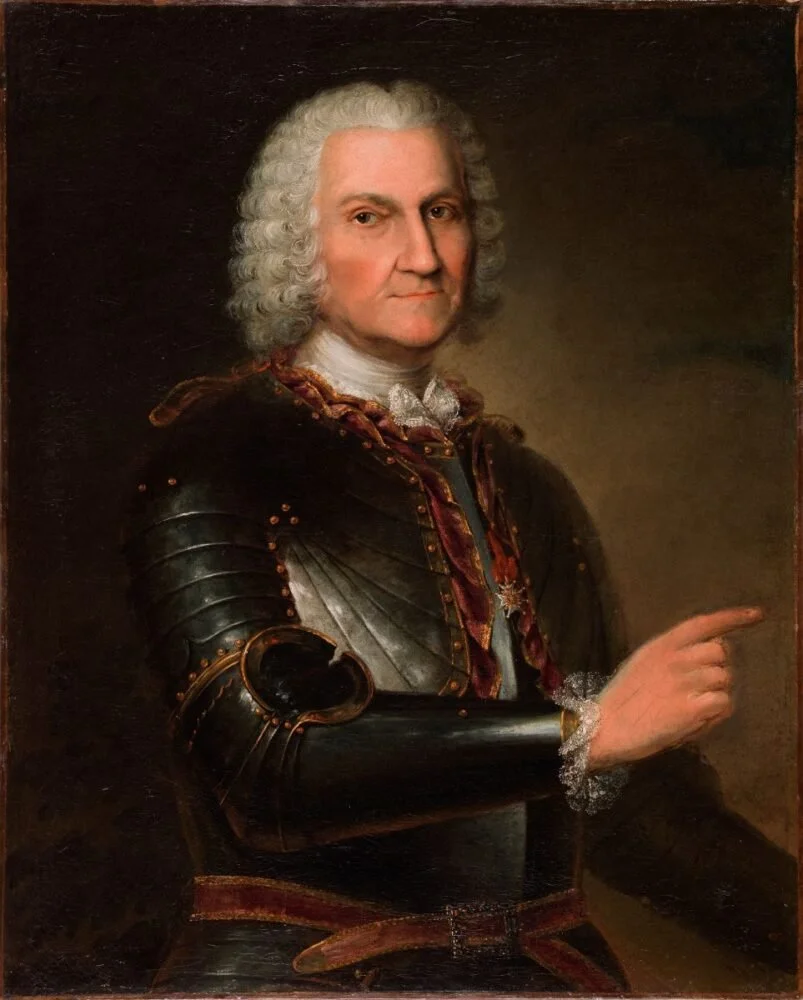
To understand Easter in New Orleans, you first have to understand the city's relationship with the Catholic Church — a relationship that dates to the very moment of its founding. When Jean-Baptiste Le Moyne de Bienville established New Orleans in 1718, he planted it as a French colonial city in a land governed by French law and French religious custom. The Catholic Church arrived with the colonizers and never left. Through Spanish rule in the latter half of the 18th century — a period that deepened rather than diluted Catholic practice — and through the Louisiana Purchase of 1803, when the young American republic absorbed a city that had never known Protestant governance, the Church remained the defining institution of New Orleans civic and spiritual life.
By the early 19th century, the era in which the building that would become Jean Lafitte House was taking shape on Esplanade Avenue, New Orleans was among the most devoutly Catholic cities on the continent. The calendar of the Church was the calendar of the city. Ash Wednesday quieted the revelry of Mardi Gras. Good Friday brought solemn processions through the Quarter. And Easter Sunday — the feast of the Resurrection — was the most sacred day of the year.
That heritage persists. New Orleans remains one of the most Catholic cities in the United States, with more than half its residents identifying with the faith. The observances that fill Holy Week today — Stations of the Cross, Palm Sunday blessings, the haunting beauty of the Easter Vigil Mass at St. Louis Cathedral — are continuations of traditions that were old when Jean Lafitte himself was navigating these streets.
Holy Week in the Crescent City: The Traditions
The Easter season in New Orleans does not begin on Sunday morning. It begins forty-six days earlier, on Ash Wednesday, when the last of the Mardi Gras beads are swept from the streets and the city turns, collectively, toward reflection and restraint.
Lent in New Orleans has always had a particular character. The city's Catholic population has historically observed the season with genuine commitment — abstaining from meat on Fridays, attending weekday Masses, participating in the Stations of the Cross — while doing so in a culture that is also deeply devoted to food, music, and the company of neighbors. The result is a forty-day season that takes the sacrifice seriously while making room for the communal rituals that sustain it.
Holy Saturday brings the Easter Vigil, one of the most beautiful liturgical events on the Catholic calendar. At St. Louis Cathedral, the vigil begins in darkness. The Paschal Candle is lit — a flame representing the light of the Resurrection — and that light passes from candle to candle through the congregation until the cathedral is illuminated. New believers receive Baptism, Confirmation, and their First Holy Communion. The symbolism is ancient and deeply moving, and at the oldest cathedral in continuous use in the United States, it carries the weight of three hundred years of unbroken practice.
Easter Sunday Mass at St. Louis Cathedral is offered at 9 a.m., 11 a.m., and 12:30 p.m. The cathedral opens to visitors after services conclude — and given its position on Jackson Square, less than a half mile from Jean Lafitte House, it is a natural anchor for any Easter Sunday itinerary.
The Easter Parades: A French Quarter Tradition
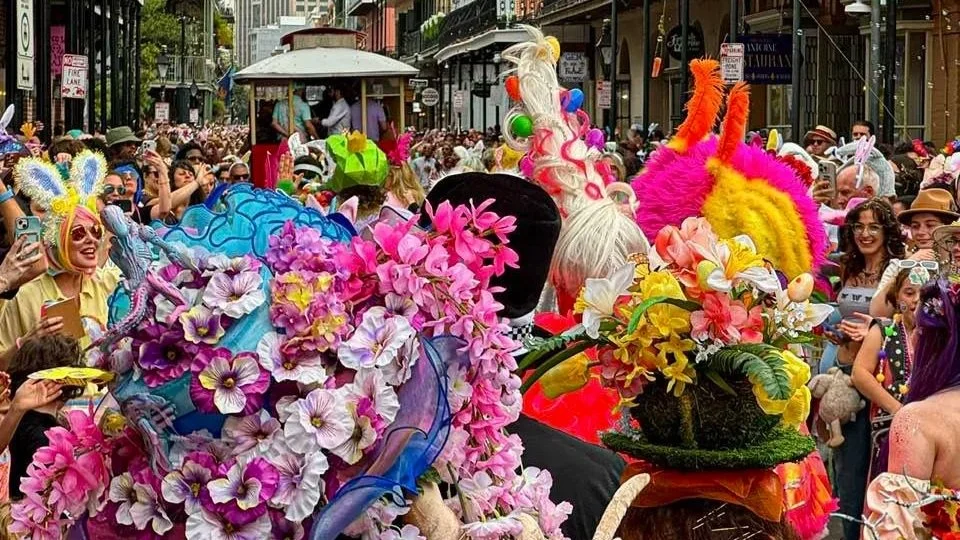
New Orleans has never needed much encouragement to put a parade together, and Easter Sunday is no exception. This year, three distinct processions will move through the French Quarter on Sunday, April 5, 2026 — each with its own character, each worth planning your day around.
The Historic French Quarter Easter Parade is the most traditional of the three. It steps off at 9:45 a.m. from the corner of St. Peter and Chartres Streets and makes its way through the Quarter in the manner of a classic New Orleans procession: mule-drawn carriages, vintage convertibles, elegant participants in their Easter finest, and the unhurried pace of a city that knows how to do ceremony right. The route carries the procession past the Cathedral and through the heart of the neighborhood that has defined New Orleans since the city's earliest days.
The French Quarter Easter Parade follows at 1:00 p.m., departing from Antoine's Restaurant — itself a piece of living New Orleans history, having operated continuously at 713 St. Louis Street since 1840. This parade brings the larger-scale energy of brass bands, floats, and costumed krewes to the afternoon, with Easter-themed throws and the kind of spectacle that turns a Sunday afternoon into a memory. Expect the streets of Royal and Bourbon to fill with crowds dressed in their most imaginative interpretations of spring finery.
The Gay Easter Parade closes the day's processions, stepping off at 4:00 p.m. from the corner of N. Rampart and St. Ann Street. One of the French Quarter's most beloved annual traditions, it routes through the neighborhood's bars, restaurants, and shops with horse-drawn carriages, showy costumes, and a spirit of joyful inclusion that is entirely consistent with the Quarter's character. All are welcome, and the crowd reflects exactly the kind of diverse, warm, neighborhood-scale gathering that defines Easter Sunday on these streets.
The Easter Table: Brunch, Crawfish, and the End of Lent
For a city that takes food as seriously as its faith, the Easter table is the secular counterpart to the morning's Mass. Easter brunch is an old New Orleans tradition — a celebratory release from the dietary disciplines of Lent — and the city's restaurants have always risen to the occasion.
The great Creole establishments of the French Quarter have offered Easter brunch for generations. Commander's Palace, Brennan's, and the Court of Two Sisters anchor the formal end of the spectrum, with jazz brunches, elaborate seasonal menus, and the kind of room that makes a holiday feel like a genuine occasion. Antoine's, directly on the parade route, is a natural choice for those who want to connect the morning's procession to an afternoon of classic French-Creole cuisine.
For those who prefer to eat as locals do, Easter Sunday is also prime crawfish season. The spring boil — piled high on newspaper-covered tables, seasoned with Cajun spice, eaten outdoors with cold beer and good company — is as authentically New Orleanian as anything the white-tablecloth establishments can offer.
And then there is the egg knocking. Known locally as pocking, this Cajun Easter tradition requires nothing more than two hard-boiled eggs and a willing opponent. Players crack their eggs point-to-point; the egg that survives intact advances. The winner, local tradition holds, enjoys good luck in the year to come.
Easter at Jean Lafitte House
Jean Lafitte House sits on Esplanade Avenue at the eastern edge of the French Quarter — a position that places guests within easy walking distance of every element of Easter Sunday in New Orleans. The Cathedral is half a mile away. The Historic French Quarter Easter Parade begins four blocks from our front door. Antoine's Restaurant, where the afternoon parade assembles, is a short walk up St. Louis Street.
Our building has stood on this tree-lined boulevard since 1809, built by Captain Rene Beluche with brick and timber from the pirate fleet. It has seen the city's Catholic traditions observed, interrupted, and revived across two centuries. Easter Sunday on Esplanade Avenue — with the magnolias in full bloom, the neighbors dressed in linen and seersucker, the sound of a brass band drifting up from the Quarter — is one of those days when the history and the present moment feel like the same thing.
Easter weekend 2026 falls on Sunday, April 5. Rooms are limited. If you are planning to be in New Orleans for the parades, the brunch, and the morning Mass at St. Louis Cathedral, book directly at jeanlafittehouse.com for the best available rate.
Jean Lafitte House is a locally-owned historic boutique hotel at 613 Esplanade Avenue, New Orleans, LA 70116. (504) 943-2543.