
Where to Watch New Orleans' Fourth of July Fireworks. Celebrate 250 Years of Independence in New Orleans.
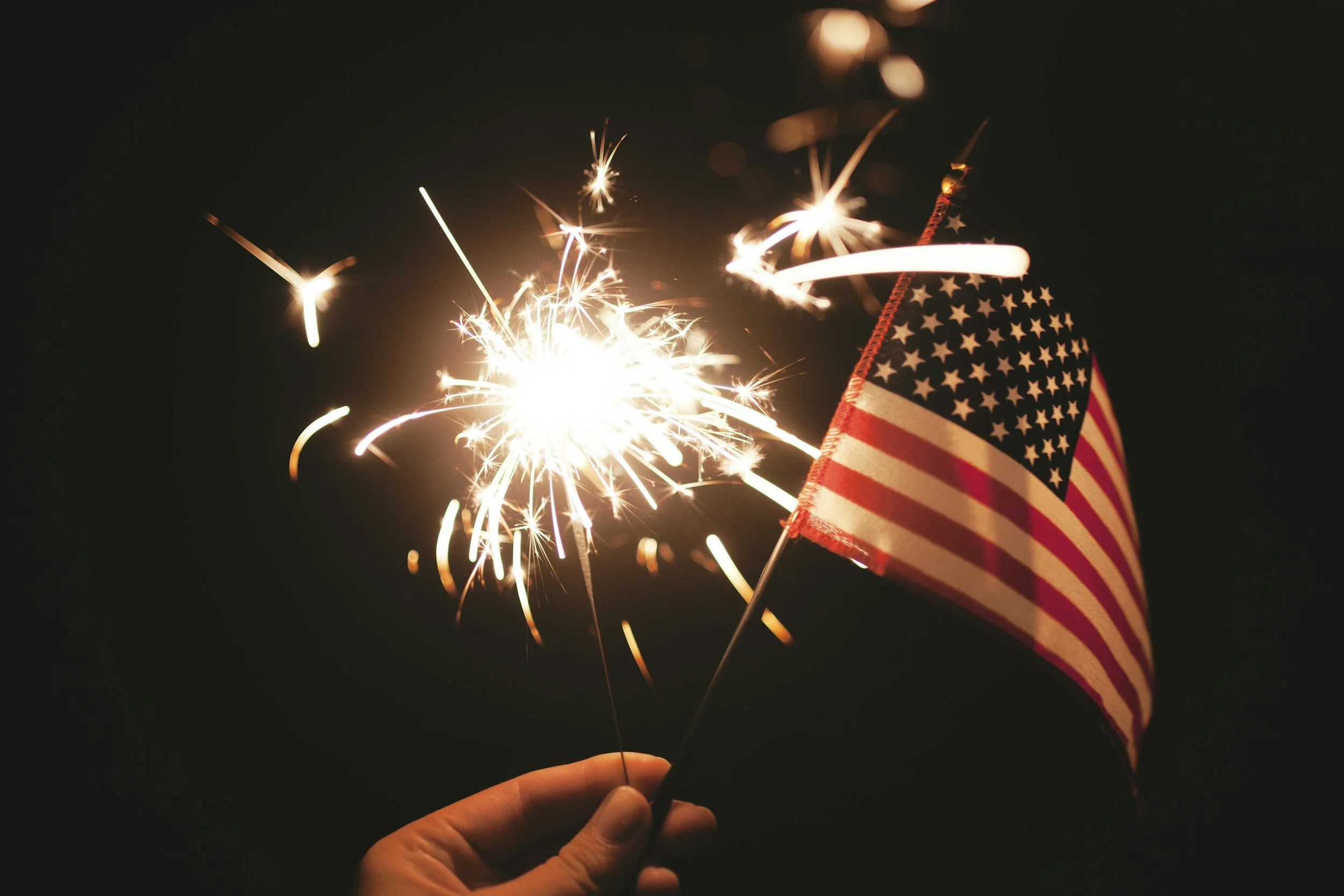
This year, the Fourth of July carries extra weight. 2026 marks the 250th anniversary of the Declaration of Independence, the nation's semiquincentennial, and New Orleans is celebrating in the way it does best: with music, a river, and a sky full of fire. For guests of Jean Lafitte House, the best of it unfolds just a short walk from our front door on Esplanade Avenue.
We may be biased, but we think there's no more fitting place to mark America's 250th birthday than a building that has already stood for 217 of those years.
A Complicated, Wonderful Relationship with Independence
Here's a piece of history that surprises most visitors: when the Declaration of Independence was signed in 1776, New Orleans wasn't American at all. The city was a Spanish colony, and had been passed between the crowns of France and Spain for decades. While thirteen colonies to the east declared their independence, the Vieux Carré went about its business under a different flag entirely.
New Orleans didn't join the young United States until 1803, when Napoleon sold the vast Louisiana Territory to Thomas Jefferson. The formal handover took place just a few blocks from our hotel, at the Cabildo on the Place d'Armes, the square we now call Jackson Square. That means the very first Independence Day ever celebrated by New Orleanians as Americans came in the summer of 1804, when the city was still learning what it meant to fly the Stars and Stripes.
Our building was constructed in 1809 only a handful of years into that new American chapter. When early residents of this neighborhood stepped out to mark those first Fourth of Julys, the walls of Jean Lafitte House were already standing. In a very real sense, this house has witnessed the celebration evolve from a modest territorial novelty into the riverfront spectacle it is today.
The Pirate Who Helped Make Louisiana American
You can't tell the story of independence in New Orleans without our namesake. Jean Lafitte, privateer, smuggler, and reluctant patriot, spent his early years operating in the shadows of the law. But when the British invaded Louisiana during the War of 1812, Lafitte and his Baratarian men threw in with General Andrew Jackson. Their gunners, gunpowder, and knowledge of the swampy terrain helped deliver the decisive American victory at the Battle of New Orleans on January 8, 1815, saving the city, and arguably securing the Louisiana Purchase itself , from British hands.
For much of the nineteenth century, New Orleanians celebrated "The Eighth" of January with the same fervor the rest of the country reserved for the Fourth of July. It was the day this proudly Creole, French-speaking city proved it had earned its place in the American republic. Lafitte, the outlaw-turned-defender, became the unlikely symbol of that hard-won belonging.
Two centuries later, his old captain's quarters welcome travelers who come to celebrate the freedom he helped protect.
Go 4th on the River: The Centerpiece of America's 250th
New Orleans' signature Independence Day event is Go 4th on the River, and for 2026 it has been designated the heart of the city's official America 250 celebration. On the evening of July 4th, at 9:00 p.m., twin barges anchored on the Mississippi launch the beloved "dueling barges" fireworks show — a free display visible up and down both banks of the river, from the Hilton Riverside downtown all the way to the French Market District.
Organizers have promised their biggest show yet in honor of the 250th. Among the special effects: a rapid-fire barrage of red, white, and blue comet tails climbing 150 feet above the water, sweeping back and forth across the river toward the Crescent City Connection bridge and mirrored in the surface of the Mississippi below. The whole show is choreographed to patriotic music, and CNN is on hand once again to broadcast the celebration to the nation.
Best of all for our guests: the river is right there. Here's where to watch.
Where to Watch the Fireworls
Jean Lafitte House sits at 613 Esplanade Avenue, on the quiet edge of the French Quarter where it meets the Faubourg Marigny — and only a few hundred yards from the Mississippi. That location gives you something most visitors would trade a great deal for on the Fourth: you can walk to the fireworks, watch the entire show, and stroll home afterward while everyone else hunts for a rideshare.
The Moonwalk & Washington Artillery Park (closest classic view — about a 7-minute walk)
Head down toward the river past the French Market and you'll reach the Moonwalk, the promenade running along the top of the levee directly across from Jackson Square. This is the quintessential French Quarter riverfront perch — steamboats gliding past, the cathedral spires behind you, and the barges lighting up the water in front. Arrive early to claim a spot along the rail.
The Old U.S. Mint & French Market Riverfront (steps away — a 3-to-5-minute walk)
The closest riverfront of all sits directly behind the historic Old U.S. Mint, barely more than a block from our door, with the French Market just beyond. The green space and levee here give you an easy, low-key vantage point without venturing far — ideal if you're traveling with little ones or simply want to keep it simple.
Crescent Park (the local's pick — about a 12-minute walk)
Just downriver in the Marigny, Crescent Park is a wide, elevated riverfront park with sweeping, unobstructed views of the water and the downtown skyline. Because it looks back upriver toward the barges, you get the fireworks framed against the glowing city — a photographer's dream, and usually less crowded than the Quarter. Enter at the Mandeville Street "rusty rainbow" pedestrian bridge, an easy walk from Esplanade.
Woldenberg Riverfront Park (about a 12-to-15-minute walk)
Follow the river upriver past Jackson Square and you'll reach Goldring/Woldenberg Riverfront Park, a grassy stretch that puts you squarely in front of the launch zone. It's one of the most popular free viewing areas in the city, with room to spread a blanket. Come early, bring water, and settle in.
Algiers Point by Ferry (a short adventure across the river)
For a completely different perspective, walk to the foot of Canal Street and catch the ferry to Algiers Point. From the West Bank levee, the fireworks explode in front of the full New Orleans skyline — a panoramic view you simply can't get from the east bank. Check the holiday ferry schedule in advance and give yourself plenty of time.
On the Water: Steamboat Natchez & Creole Queen
If you'd rather watch from the middle of the Mississippi itself, the Steamboat Natchez and the Paddlewheeler Creole Queen both run Fourth of July dinner cruises with Creole buffets, live jazz, and front-row seats to the show. The Natchez also offers festive daytime calliope concerts at its Toulouse Street wharf. These book up fast, so reserve ahead.
Vue Orleans Observation Deck (air-conditioned comfort)
Not everyone loves a July evening on a humid levee. The Vue Orleans observation deck near the foot of Canal Street offers 360-degree views of the river and skyline from behind glass — a cool, comfortable alternative for those who want the spectacle without the swelter.
A Few Local Tips
New Orleans in July is gloriously, unapologetically hot. Bring water, a hand fan or portable fan, and sunscreen if you head out before dusk. Pack a light blanket or folding chairs if you're claiming a riverfront spot early. Skip driving entirely — parking near the river on the Fourth is a headache, which is exactly why staying within walking distance is such a luxury. And if you want to make a full weekend of it, the holiday coincides with the ESSENCE Festival of Culture (July 3–5) downtown, "Happy 3rd of July" fireworks in City Park the night before, and America 250 programming at the National WWII Museum.
Celebrate 250 Years of Independence from a Home That's Seen 217 of Them
Here's what makes Jean Lafitte House more than a place to sleep on the Fourth of July. This building was raised in 1809 — 217 years ago — in the earliest years of American New Orleans. It's named for Jean Lafitte, the pirate-turned-patriot whose guns helped defend Louisiana against a British invasion and keep this city American. When you step out our gated door and walk to the river to watch the nation's 250th birthday light up the Mississippi, you're not just attending the celebration — you're staying inside the history it commemorates.
The fireworks will fade, as they always do. The walk home, back through the lamplit streets of the Quarter to our courtyard and its quiet plunge pool, is the part you'll remember.
Independence Day weekend is one of New Orleans' busiest, and this milestone year even more so. Book your stay at Jean Lafitte House now — and celebrate America's 250th from the one address in New Orleans where the story of American independence has been unfolding for more than two centuries.
Jean Lafitte House · 613 Esplanade Avenue · On the edge of the French Quarter, a short walk from the Mississippi River.