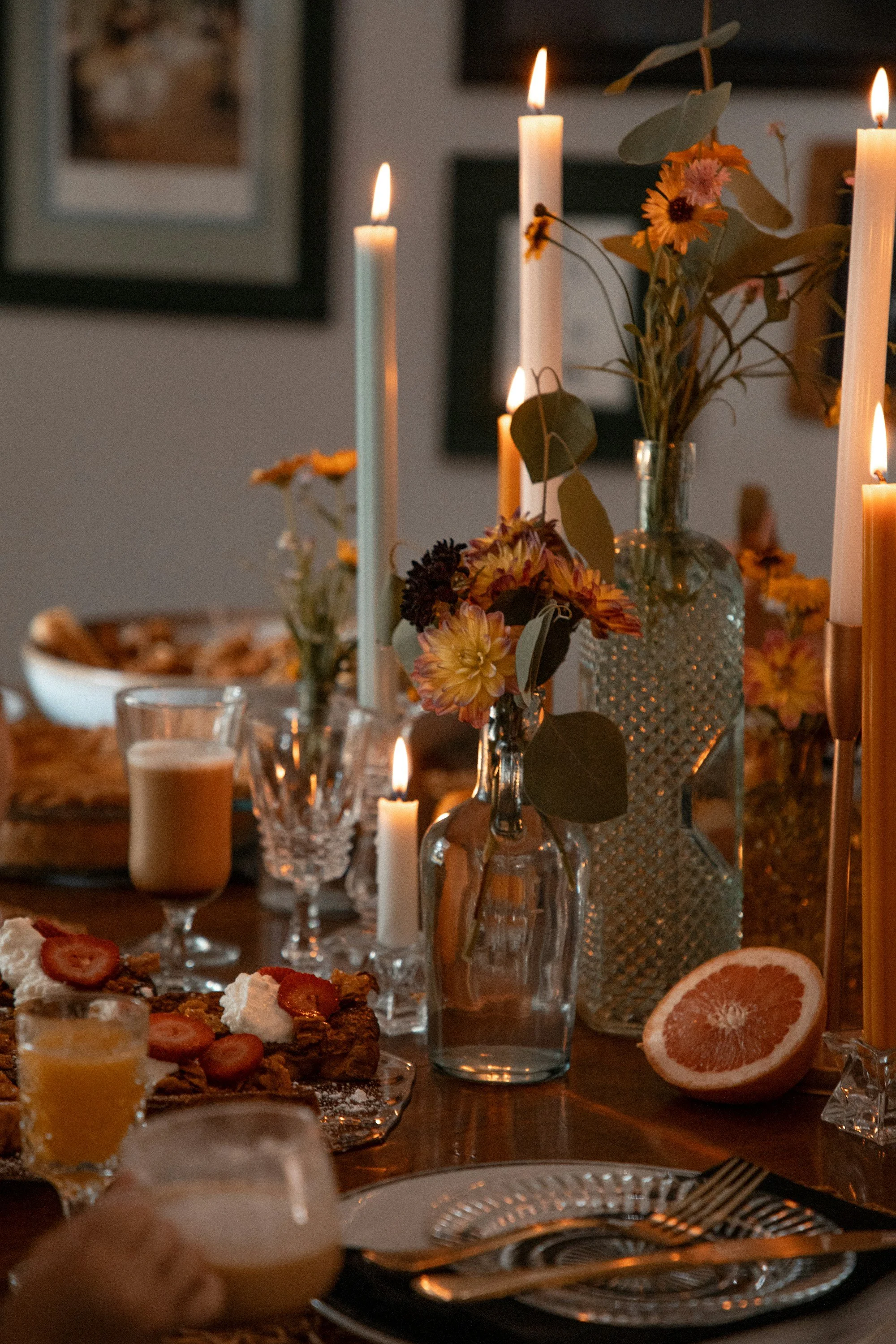
Réveillon was a late supper eaten by candlelight after midnight Mass. Photo: Zac Cain / Unsplash
A Réveillon dinner is a multi-course Creole feast that New Orleans families once ate late on Christmas Eve, after midnight Mass, and that French Quarter restaurants now serve as special menus through December. The word comes from the French réveil, "awakening," because the meal kept the household up into the small hours.
In the 1800s, Réveillon was a private affair held in Creole dining rooms a few blocks from where we sit on Esplanade Avenue. It faded by the 1930s, then came back in the 1980s as a restaurant tradition that now runs from December 1 through the holidays.
If you are planning a December trip, this post tells you where Réveillon came from, what was on the table, and where to find it in 2026.
What is a Réveillon dinner?
Réveillon is the Creole name for a lavish supper eaten after midnight Mass on Christmas Eve. In 19th-century New Orleans, Catholic families fasted through Christmas Eve, walked to church, and then came home around two in the morning to a table that had been laid before they left. The custom is "rooted in the nineteenth century," as the Louisiana Endowment for the Humanities puts it, and it was as much about the hour as the food.
A few details made it distinct from a Christmas dinner elsewhere:
- The fast came first. Communion at midnight Mass required an empty stomach, so the meal broke a fast that had lasted since the previous night.
- The hour was late. Historic houses on the Hermann-Grima and Gallier house tours describe it as an "extravagant family meal following midnight mass."
- Gifts waited. French-speaking families gave presents at New Year's, not Christmas, so Christmas Eve was for church and the table.
- There were two of them. Many Creole families held a second Réveillon on New Year's Eve, a custom the Daily Picayune was already calling old in 1897.
Where did the tradition come from?
Réveillon came to New Orleans with its French Catholic settlers and survived because the city's calendar followed the Church's calendar. The same liturgical rhythm that gives New Orleans Mardi Gras (the day before Lent) gave it a feast on the night the Christmas fast ended. Midnight Mass at St. Louis Cathedral on Jackson Square was the anchor, and the cathedral still describes itself as America's oldest continuously active Catholic cathedral community, established in 1718.
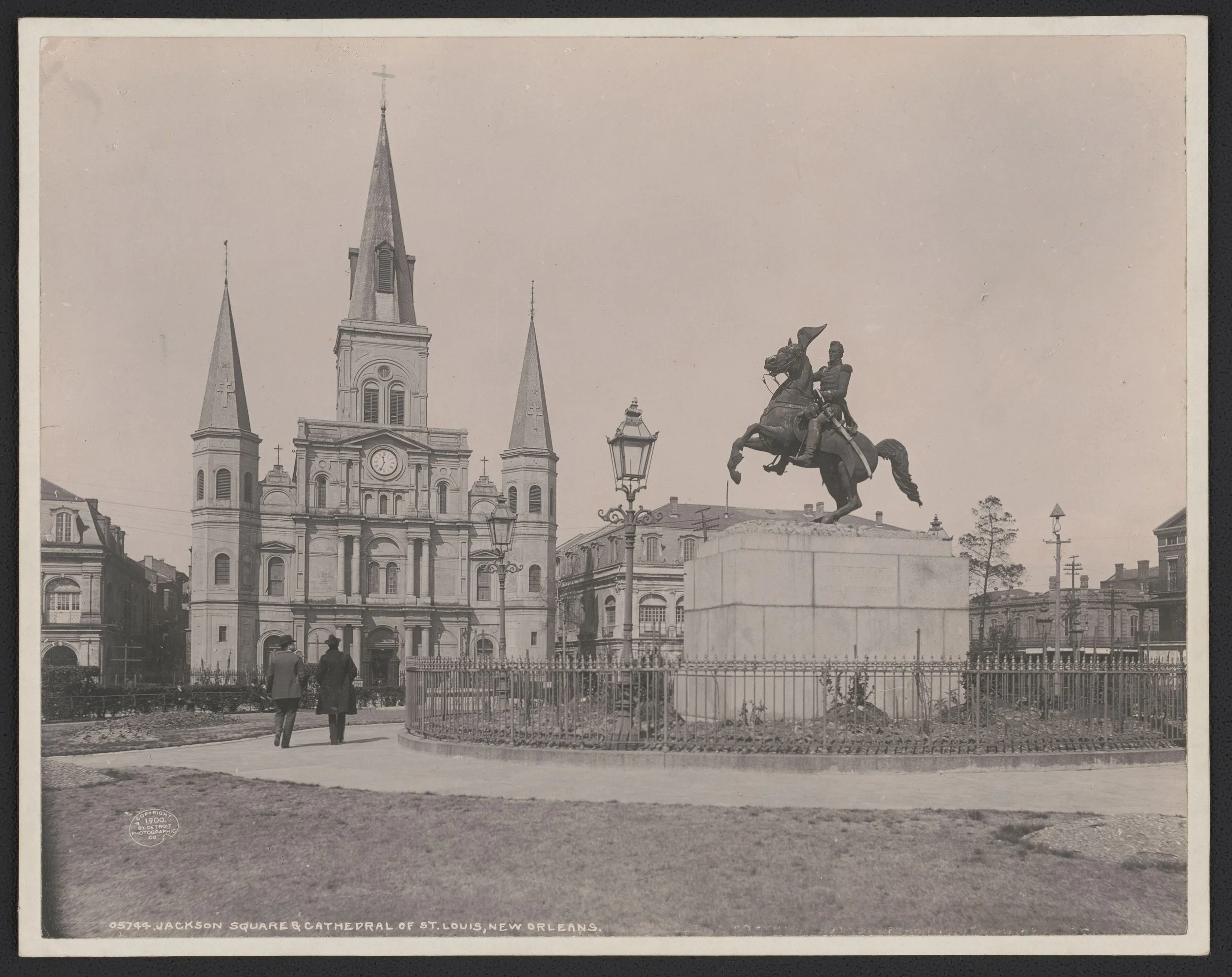
Midnight Mass at St. Louis Cathedral, seen here in 1900, was the anchor of the Creole Réveillon. Photo: Detroit Photographic Co., 1900, public domain
The custom was strongest in the French Quarter and in the Creole neighborhoods just downriver and lakeward of it, including the blocks along Esplanade Avenue where wealthy Creole families built their townhouses in the mid-1800s. Our earlier post on Esplanade Avenue as the grand boulevard of Creole New Orleans tells that part of the story, and our new walking guide to Esplanade Avenue follows it block by block.
By the 1920s most New Orleans kitchens had adopted American holiday habits, and the home Réveillon survived mainly in private clubs, hotels and the most traditional families. New Orleans Magazine puts it bluntly: by the 1930s the custom "was all but forgotten." In 1938 the WPA's New Orleans City Guide was defining the word for readers who had never heard it.
What was on a 19th-century Réveillon table?
Dishes were rich, cold-weather Creole food that could be cooked ahead and served at two in the morning. The historic house museums list a menu of oyster gumbo, roasted goose, daube glacé, soufflés, plum pudding and coconut cake. Public radio's food writers add egg dishes, breads, puddings, turtle soup, oysters, grillades and game birds.
A typical table might have included:
- Oyster gumbo or oyster stew, since Gulf oysters are at their best in the cool months.
- Daube glacé, a spiced beef in its own jellied stock, sliced cold. Writers who covered the 1980s revival noted it was reliably present on the first restaurant menus.
- Egg dishes and sweet breads, because the meal was, in effect, a very late breakfast.
- Game, roast goose or smothered veal as the centerpiece.
- Soufflés, puddings, candied fruit, and a bûche de Noël or croquembouche to finish.
- Wine, brandy and cordials, then coffee. The flaming café brûlot came later: Antoine's, founded in 1840, credits Jules Alciatore with popularizing it in the late 1800s.
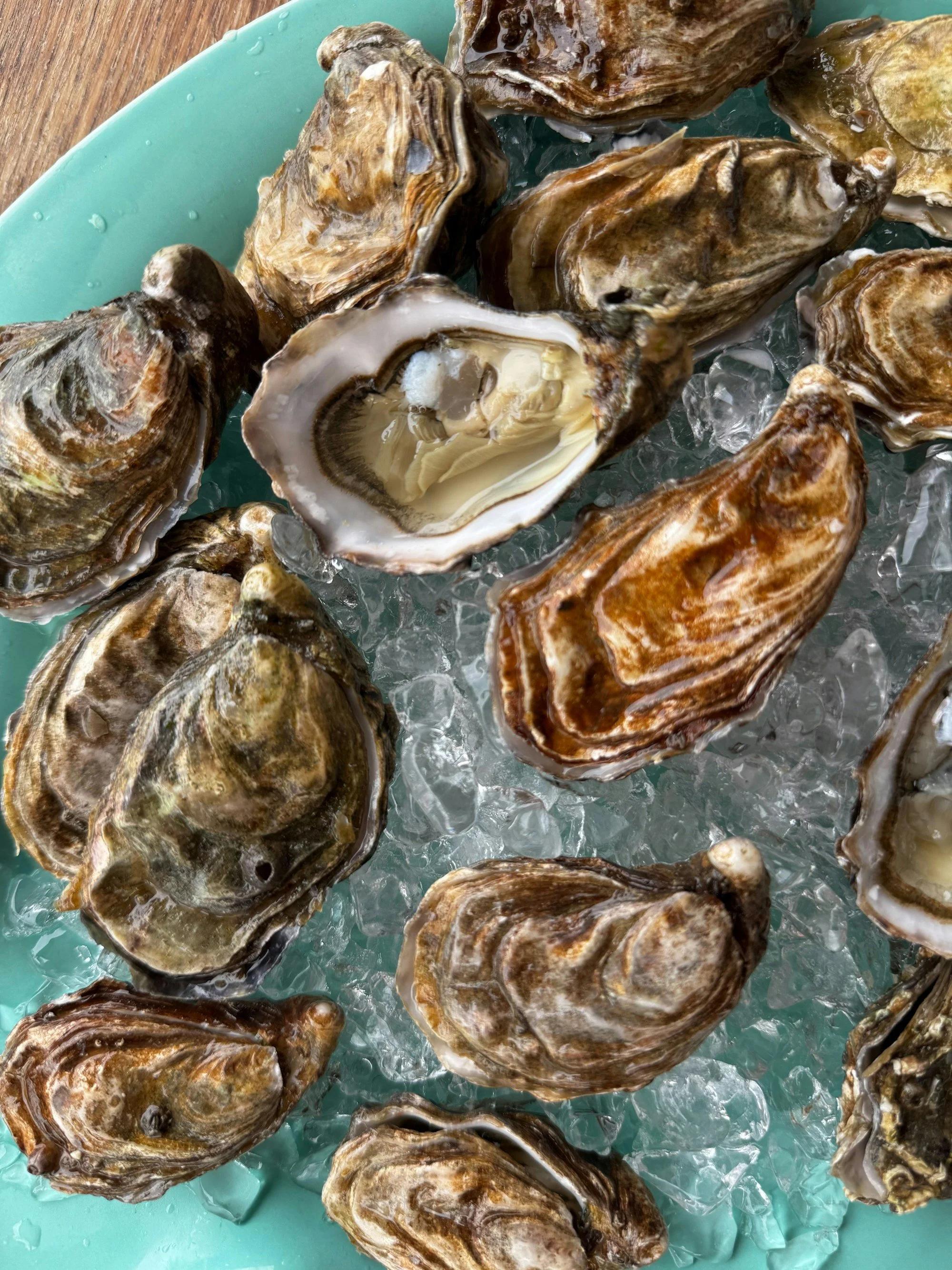
Oyster gumbo and oyster stew opened the 19th-century Réveillon, and oysters still open many menus today. Photo: Ice Family / Unsplash
How did a lost tradition come back?
Réveillon returned in the mid-1980s as a restaurant promotion, not a family custom. Members of French Quarter Festivals, Inc. wanted to fill Quarter restaurants and hotels in the slow weeks before Christmas, and local historians suggested reviving the old Creole supper as a prix-fixe menu. The Louisiana Endowment for the Humanities dates the first season to the 1986 holidays, with fifteen restaurants taking part for three weeks and Ralph Brennan of Mr. B's Bistro the first to sign up. New Orleans Magazine gives 1988, and the promotion's own organizers count their 40th year in 2025. Call it the mid-1980s.
The early years were slow. In 2003 the organizers dropped the requirement that restaurants submit menus for approval, and participation grew. By 2023 nearly fifty restaurants were serving Réveillon menus, and the program had been folded into the city's "Holidays New Orleans Style" season.
What you eat today is a modern chef's reading of the old menu, usually three or four courses, often with gumbo or oysters to start and a bûche de Noël or bread pudding at the end. Some restaurants hold to the Creole classics. Others treat the format as an invitation.
Where can you eat a Réveillon dinner in 2026?
The 2026 season begins December 1, according to the tourism board's Réveillon page, and most participating restaurants run their menus through December 23 or 24, with some continuing to New Year's Eve. The official list of 2026 restaurants had not been posted when we wrote this, so check the tourism board's Réveillon page and each restaurant's site before you reserve. These are the ones we would walk to from Esplanade Avenue:
- Muriel's Jackson Square, 801 Chartres Street. The first restaurant to post a 2026 Réveillon menu, running December 1 to 23, with a gumbo course to open.
- Arnaud's, 813 Bienville Street. Served a three-course Réveillon from December 1 last year and has kept the custom for decades.
- Antoine's, 713 St. Louis Street. Founded in 1840 and the home of café brûlot, which is the right way to end a Réveillon.
- Tujague's, 429 Decatur Street. A Réveillon regular on last year's list, a short walk up Decatur from the French Market.
- Criollo at the Hotel Monteleone, 214 Royal Street. Also on last year's list of Réveillon menus.
- Mr. B's Bistro, 201 Royal Street. The restaurant that signed up first in the 1980s and still serves Creole classics.
- Café Degas, on Esplanade Avenue toward Bayou St. John, is our neighborhood's French bistro and posted a New Year's Eve dinner last year.
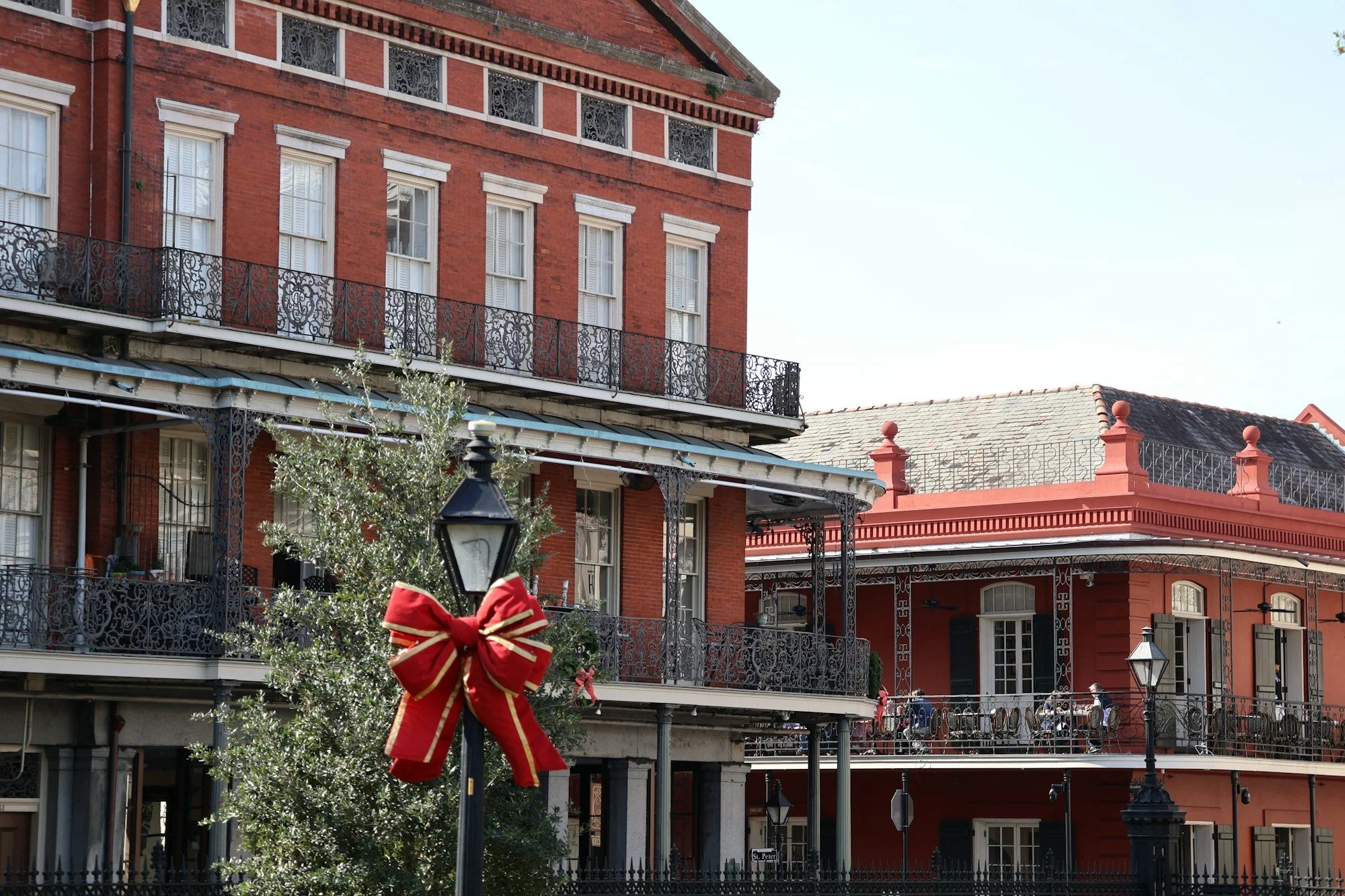
The Quarter’s balconies and lampposts are dressed for the season by early December. Photo: Keerthi Gedda / Unsplash
Plan Your Visit
- Reserve early. Réveillon menus are seasonal, and the weekends before Christmas fill first. Book directly with the restaurant.
- Look for the menu on the restaurant's own site. The tourism board's Réveillon page links to participants once the season opens on December 1.
- Pair dinner with a free concert. French Quarter Festivals, Inc. has scheduled cathedral concerts on December 2 and December 20, 2026, and the Patio Planters' Caroling in Jackson Square is set for Sunday, December 20, 2026 at 7 PM.
- Midnight Mass schedules for Christmas Eve are posted by the cathedral in December. Check stlouiscathedral.org before you plan around it.
- Dress is relaxed but considered in the grand dining rooms. A jacket is never wrong at Antoine's or Arnaud's.
- Walk. Every restaurant above is within about a mile of Esplanade Avenue, and the Quarter's lamplit streets are the best part of a December evening.
Frequently Asked Questions
What does Réveillon mean? It comes from the French réveil, "awakening." The name refers to staying awake for a late supper after midnight Mass on Christmas Eve.
When is Réveillon season in New Orleans in 2026? The restaurant season begins December 1, 2026. Most menus run through December 23 or 24, and some restaurants also serve a Réveillon on New Year's Eve.
Is Réveillon a fixed menu? Usually yes. Restaurants offer a prix-fixe menu of three or four courses, often alongside their regular menu, so you can choose either.
Do I need to be Catholic or attend Mass to enjoy Réveillon? No. The restaurant tradition is open to everyone. Midnight Mass at St. Louis Cathedral is a separate, public service for those who want the original experience.
Which restaurant started the modern Réveillon? Mr. B's Bistro, under Ralph Brennan, was the first to sign up when French Quarter Festivals, Inc. revived the custom in the mid-1980s, with about fifteen restaurants in the first season.
Réveillon began as a supper after midnight Mass, when Creole families broke the Christmas Eve fast together in dining rooms a few blocks from ours. Today it lives on in December menus across the French Quarter, and the walk home afterward, under the lamps and past the balconies, is part of the meal. If you would like that walk to end on Esplanade Avenue, our rooms are a few quiet blocks from every table on this list, each with a kitchenette for the morning after.