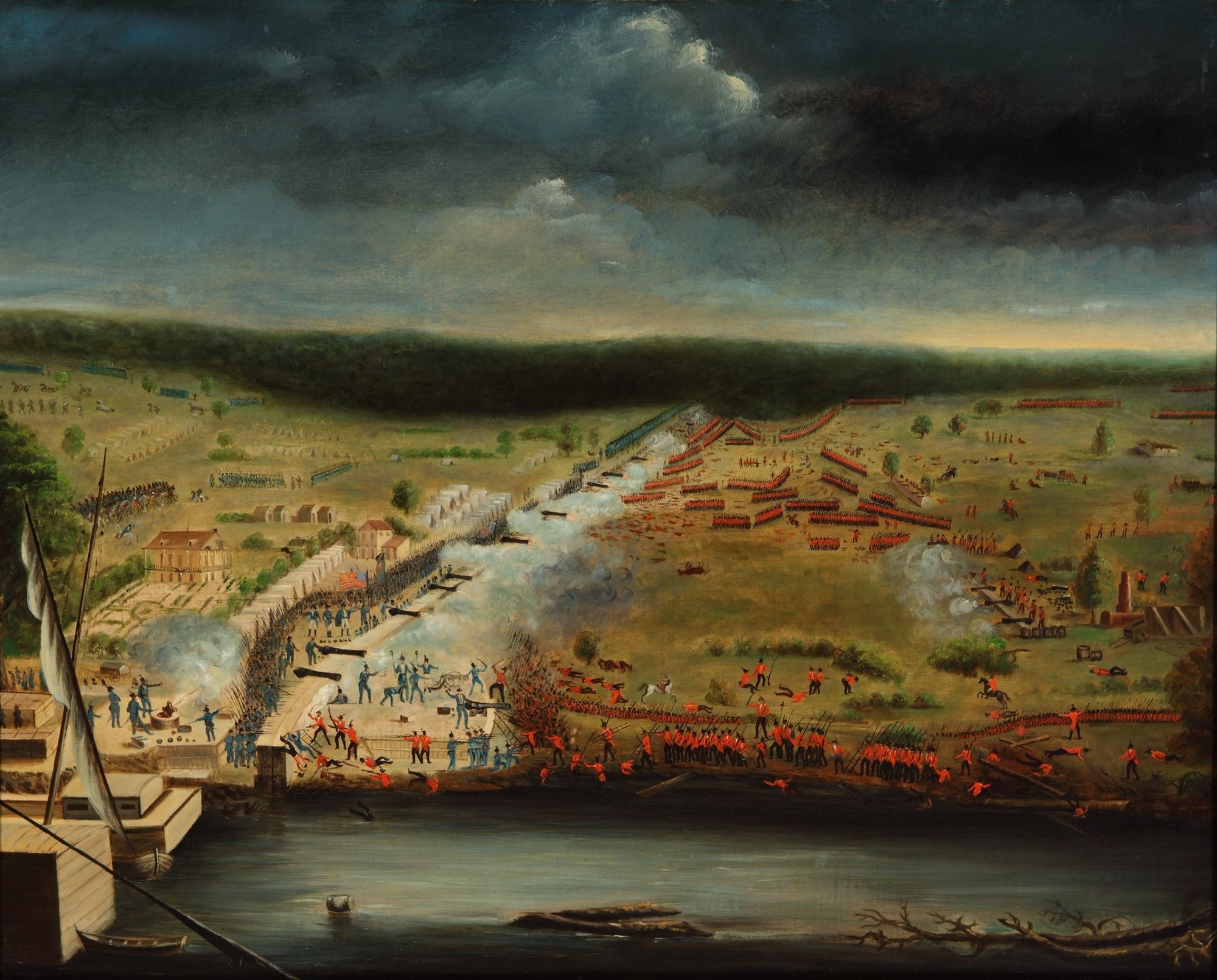
Laclotte, a Louisiana militiaman who fought in the battle, painted the January 8 assault from his own sketches. Image: New Orleans Museum of Art, public domain
The Battle of New Orleans was fought on the morning of January 8, 1815, on the Chalmette plantation six miles downriver from the French Quarter, when a British army of about 8,000 attacked Andrew Jackson's earthwork line and lost more than 2,000 men in under half an hour against 71 American casualties. It was the last major battle of the War of 1812, fought two weeks after the peace treaty was signed in Europe but before anyone in Louisiana knew it.
Jean Lafitte, whose name this house carries, is part of the story, but not the part the legends tell. He refused a British offer, warned the Americans, was raided for his trouble, and then supplied Jackson with flints and gunners, who were pardoned by the President a month later.
This is the campaign from the British fleet's arrival to the wreath-laying held at Chalmette every January 8.
Why did the British attack New Orleans?
The British came for the Mississippi. Whoever held New Orleans controlled the river trade of the entire American interior, and in late 1814 a British fleet under Admiral Alexander Cochrane sailed for the Gulf Coast to take it. Andrew Jackson, commanding American forces in the south, reached the city in early December "just as the sails of the British fleet were sighted off the coast," in the words of the Historic New Orleans Collection.
The campaign moved fast:
- December 14, 1814. British ships destroyed the American gunboats on Lake Borgne, east of the city, opening the water route toward New Orleans. The British lost 17 killed and 77 wounded, the Americans 6 killed and 35 wounded, according to the National Park Service's history of the battlefield.
- December 16. Jackson declared martial law in New Orleans, the first such declaration in United States history. He did not lift it until March 13, 1815, and a federal judge later fined him a thousand dollars for contempt. He paid.
- December 22 to 23. Guided by local fishermen, British troops came through the bayous east of the city and reached the Villeré plantation on the river, nine miles below town, without being stopped.
"Louisianans of all colors and creeds heeded his call for aid," the Historic New Orleans Collection notes, and John Coffee's Tennessee militia marched 135 miles to arrive on December 20.
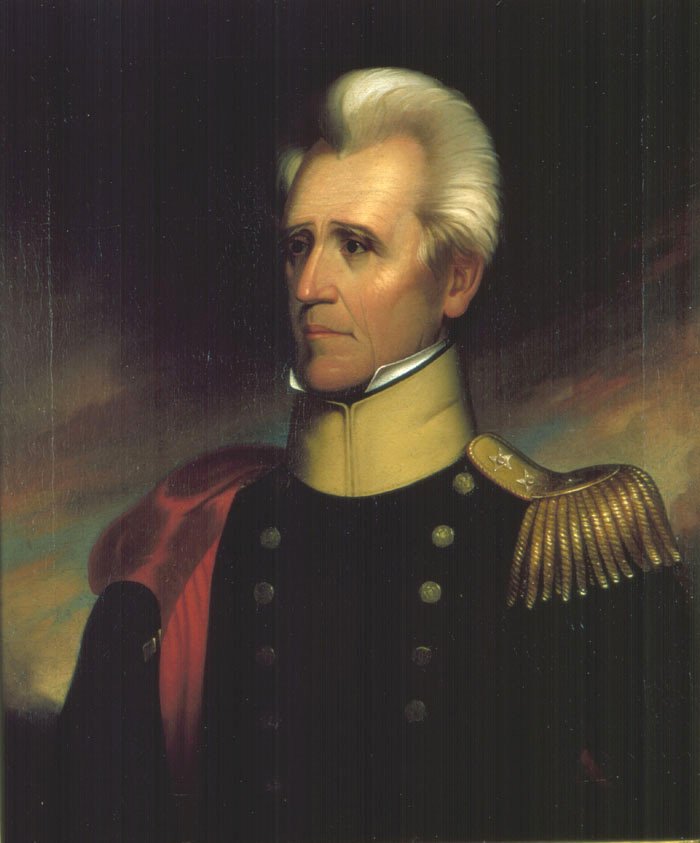
Andrew Jackson, painted in 1837 by Ralph E. W. Earl, who lived at the Hermitage as the general’s resident artist. Image: public domain
What did Jean Lafitte actually do?
Jean Lafitte did not lead a pirate army into battle. He turned down the British, warned the Americans, and then traded his men's service for pardons. That is the documented story, and it is better than the legend.
In September 1814 British officers sailed to Lafitte's base at Grand Terre, on Barataria Bay below the city, and offered him pardons, land, repayment for lost property, a captain's commission and 30,000 dollars to help them take New Orleans. Lafitte declined and sent word to Governor William Claiborne, offering his own help in exchange for pardons. The Americans answered on September 16 by raiding Grand Terre and seizing the Baratarians' ships.
Jackson, when he first heard of Lafitte, called the Baratarians "hellish banditti." Claiborne wrote to him that Lafitte and his associates "might probably be made useful to us." Jackson came around. The brothers Jean and Pierre Laffite, as the historian William C. Davis spells the name, supplied several thousand musket flints to his army, and the Baratarians' knowledge of the bayous and skill with cannon were worth more than their numbers.
On the line itself:
- Battery No. 3, two 24-pounders at the center of Jackson's rampart, was commanded by the privateer captains Dominique You and Renato Beluche and served by "French mariners," according to Arsène Lacarrière Latour, Jackson's engineer, who wrote the first history of the campaign in 1816. (Beluche is the captain our Our History page connects to this house; the story goes that he built the front building, and we tell it as the house's tradition. Our full post on Renato Beluche is coming in January.)
- About fifty Baratarians in all served the guns on the American line and aboard the American warships, the American Battlefield Trust estimates.
- On February 6, 1815, President James Madison issued a proclamation pardoning the inhabitants of Barataria who had shown "unequivocal traits of courage and fidelity" in the defense of New Orleans.
No reliable source puts Jean Lafitte himself behind a gun on January 8. His war was fought in letters, flints and the men he lent. Our earlier post, Who is Jean Lafitte, covers the rest of his life.
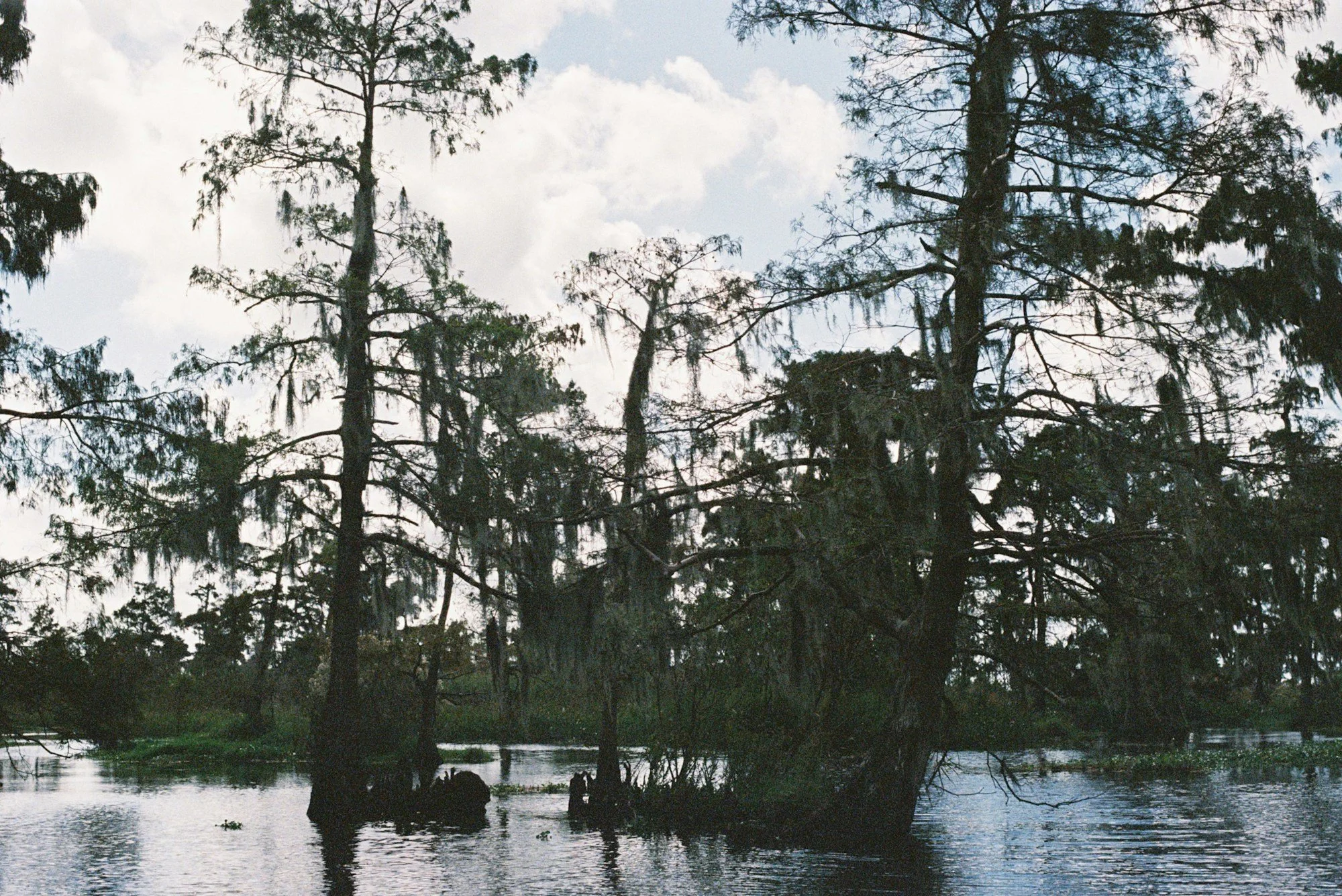
The bayous and cypress swamps below the city were Lafitte’s country and the British army’s hardest obstacle. Photo: Sasha Matveeva / Unsplash
What happened on January 8, 1815?
The British marched in the fog straight at an earthwork wall and were cut down by artillery and rifle fire in less time than it takes to eat breakfast. The fighting that morning was the last of three engagements:
- The night battle, December 23. The evening the British reached Villeré's plantation, Jackson attacked their camp in the dark with regulars of the 7th and 44th Infantry, Plauché's volunteers, Daquin's battalion of free men of color and a party of Choctaw under Pierre Juzan. Neither side won, but the British stopped to regroup, and Jackson fell back two miles to the Rodriguez Canal on the Chalmette plantation and began digging.
- The artillery duel, January 1. The British opened fire on the American earthworks at 10 in the morning on New Year's Day; by afternoon the American guns had the better of it and the British batteries fell silent.
- The assault, January 8. At about 6:20 in the morning the British columns under Generals Gibbs and Keane advanced across the open plain toward "Line Jackson." The American Battlefield Trust puts the result plainly: of 3,000 men in the assault, "2,000 become casualties in less than 30 minutes." General Edward Pakenham, the British commander, was fatally wounded by grapeshot trying to rally them, and General John Lambert ordered the withdrawal.
The numbers, as the American Battlefield Trust records them: 71 American casualties (13 killed, 39 wounded, 19 missing or captured) against 2,034 British (285 killed, 1,265 wounded, 484 missing or captured). The Louisiana Endowment for the Humanities gives 291 British dead. Either way, it was one of the most lopsided results in American military history.
Who stood behind the rampart matters as much as the result. Latour's account of the line lists:
- Tennessee militia under Generals Carroll and Coffee, and Kentucky troops under General Adair.
- Two battalions of free men of color: Major Daquin's battalion of Saint-Domingue men, and Major Lacoste's battalion of Louisiana men. The Louisiana Endowment for the Humanities counts 353 New Orleanians and 256 Saint-Dominguans among them, and the National Park Service says free Black militiamen and enslaved volunteers added more than 900 men to Jackson's defenses. Among them was the drummer Jordan Noble, born enslaved in Georgia in 1800.
- Major Plauché's battalion of uniformed volunteer companies from the city.
- Choctaw warriors under Captain Pierre Juzan, between 30 and 60 of them, posted on the extreme left where the line met the cypress swamp. Juzan was paid 131 dollars and 70 cents and one blanket for three months' service.
- The 7th U.S. Infantry, Marines, sailors from the schooner Carolina at Battery No. 4, and the Baratarians at Battery No. 3.
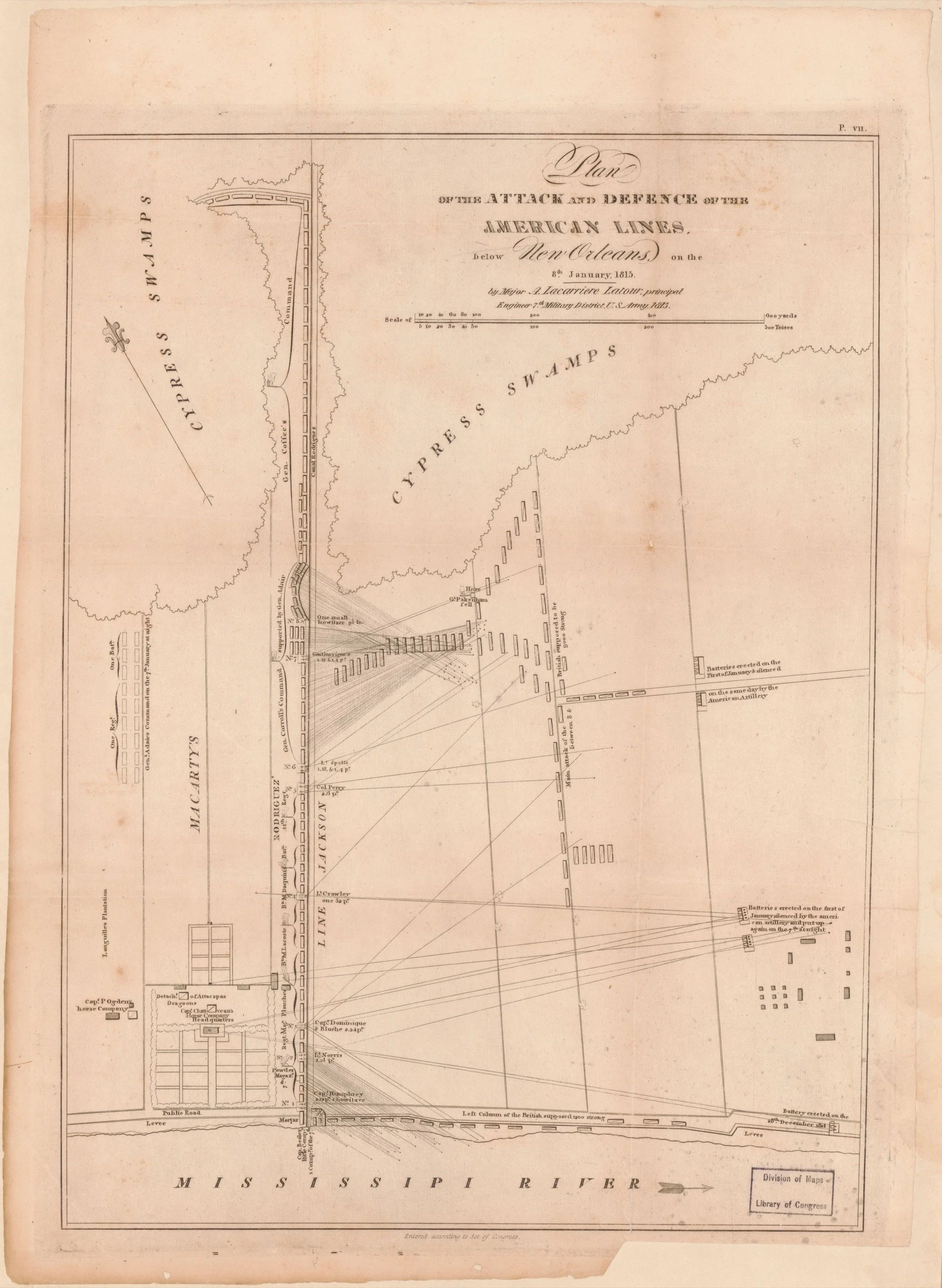
Jackson’s engineer Latour drew the line battery by battery; Battery No. 3, under You and Beluche, sits near the river end. Map: public domain
Was the Battle of New Orleans fought after the war ended?
No. The Treaty of Ghent was signed in Belgium on December 24, 1814, but the war did not end at the signing. Both governments had to ratify the treaty, and hostilities continued until they did. The United States Senate approved it unanimously on February 16, 1815, and ratifications were exchanged on February 17, more than five weeks after the battle.
Two things follow. First, the men at Chalmette were fighting a real war, not a mistake: the treaty restored prewar borders, but a British army holding the mouth of the Mississippi would have changed the negotiation. Second, the victory reached Washington before the treaty did. The Senate's own history records that news of New Orleans "provided a psychological boost" that pushed senators to approve the peace immediately and unanimously.
The city remembered the date. Through the nineteenth century New Orleans kept "the Glorious Eighth of January" as a civic holiday of parades and speeches, the Historic New Orleans Collection's curator notes, and the Park Service still marks it every year.
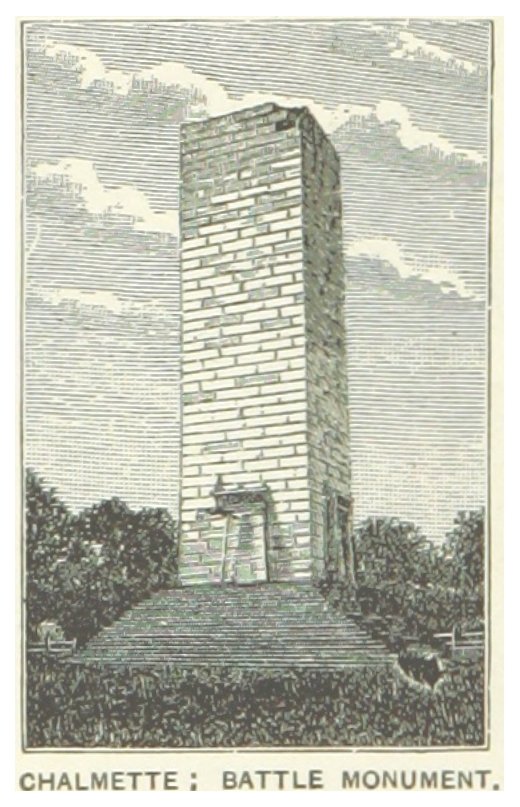
The Chalmette Monument as it stood in 1891, half-built. The federal government finished it in 1908. Engraving: public domain
How do you visit Chalmette Battlefield today?
Chalmette Battlefield is a free unit of Jean Lafitte National Historical Park and Preserve, six miles downriver from the French Quarter, with a visitor center at 1 Battlefield Drive, the hundred-foot Chalmette Monument, the 1830s Malus-Beauregard House and a national cemetery.
- The field and the line. The Rodriguez Canal and a reconstructed section of the rampart mark where Line Jackson stood. The grounds are open to pedestrians year-round from sunrise to sunset.
- The Chalmette Monument. The Park Service dates a cornerstone to January 13, 1840, the battle's 25th anniversary, though accounts differ on where it was laid, and the state only began building after buying the land in 1855, and the work "proceeded slowly, with many interruptions," the Park Service says. The federal government finished the obelisk in 1908 at just over 100 feet. The 1891 engraving in this post shows it half-built, as it stood for decades.
- The Malus-Beauregard House. Built in 1832 and 1833, after the battle, and currently under restoration.
- Chalmette National Cemetery. Established in May 1864 during the Civil War, with more than 16,000 burials from every American conflict from the War of 1812 to Vietnam. It is open every day.
- Getting there. There is no bus service. The Creole Queen paddlewheeler sails from the French Quarter riverfront to the battlefield with a ranger-led shore stop; confirm sailing days with the operator. By car it is 20 to 30 minutes.
- January 8. The Park Service holds an annual commemoration. In 2026 it included a wreath-laying at the Chalmette Monument at 11 AM on January 8 (the Park Service also listed one at Jackson Square, without a time), daily battle talks, and a memorial illumination driving tour on the following Saturday evening. The 2027 program had not been posted when we wrote this; the Park Service usually releases it in late December. We cover it in our post on the Chalmette anniversary.
Back in the Quarter, the Place d'Armes was renamed Jackson Square in January 1851, and Clark Mills's equestrian statue of the general was unveiled there on February 9, 1856 before a reported ten thousand people. Our Jackson Square post has the square's longer story.
Plan Your Visit
- Give the battlefield two hours: the visitor center film and exhibits, the walk along the rampart to the river, and the cemetery half a mile away.
- Go in the morning. The field is open and shadeless, and January 8 can be cold and foggy, as it was in 1815.
- Take the boat if it is sailing. The river approach is how the British saw the ground, and the ranger talk on the shore stop is the best short telling of the battle.
- Pair it with the Historic New Orleans Collection on Royal Street, whose Andrew Jackson exhibition includes the general's own orders to the militia.
- Read Latour. His 1816 Historical Memoir, written by Jackson's engineer, is the first history of the campaign and is quoted throughout this post.
Frequently Asked Questions
When was the Battle of New Orleans? The main battle was fought on January 8, 1815. The campaign began with the Battle of Lake Borgne on December 14, 1814, and included a night battle on December 23 and an artillery duel on January 1.
Did Jean Lafitte fight in the Battle of New Orleans? Lafitte refused a British offer, warned the Americans, and supplied Jackson with flints and gunners. His captains Dominique You and Renato Beluche commanded Battery No. 3 on the American line. No reliable source places Lafitte himself on the line on January 8.
How many died at the Battle of New Orleans? The American Battlefield Trust records 71 American casualties, 13 of them killed, against 2,034 British casualties, including 285 killed, 1,265 wounded and 484 missing or captured.
Was the War of 1812 over when the battle was fought? No. The Treaty of Ghent was signed on December 24, 1814, but it did not take effect until ratifications were exchanged on February 17, 1815. Hostilities continued until then.
How far is Chalmette Battlefield from the French Quarter?
Stay on the Avenue That Carries Lafitte's Name
The men who held Jackson's line went home to the streets you will walk. Jean Lafitte House carries the name of the man who sent them, on the avenue that was the city's edge in 1815, and the story goes that his captain Renato Beluche built our front building.
If you come for the anniversary in January, the battlefield is a morning's trip and the French Quarter is at your door. Our rooms sleep two to six and every unit has a kitchenette. Book your stay at Jean Lafitte House.