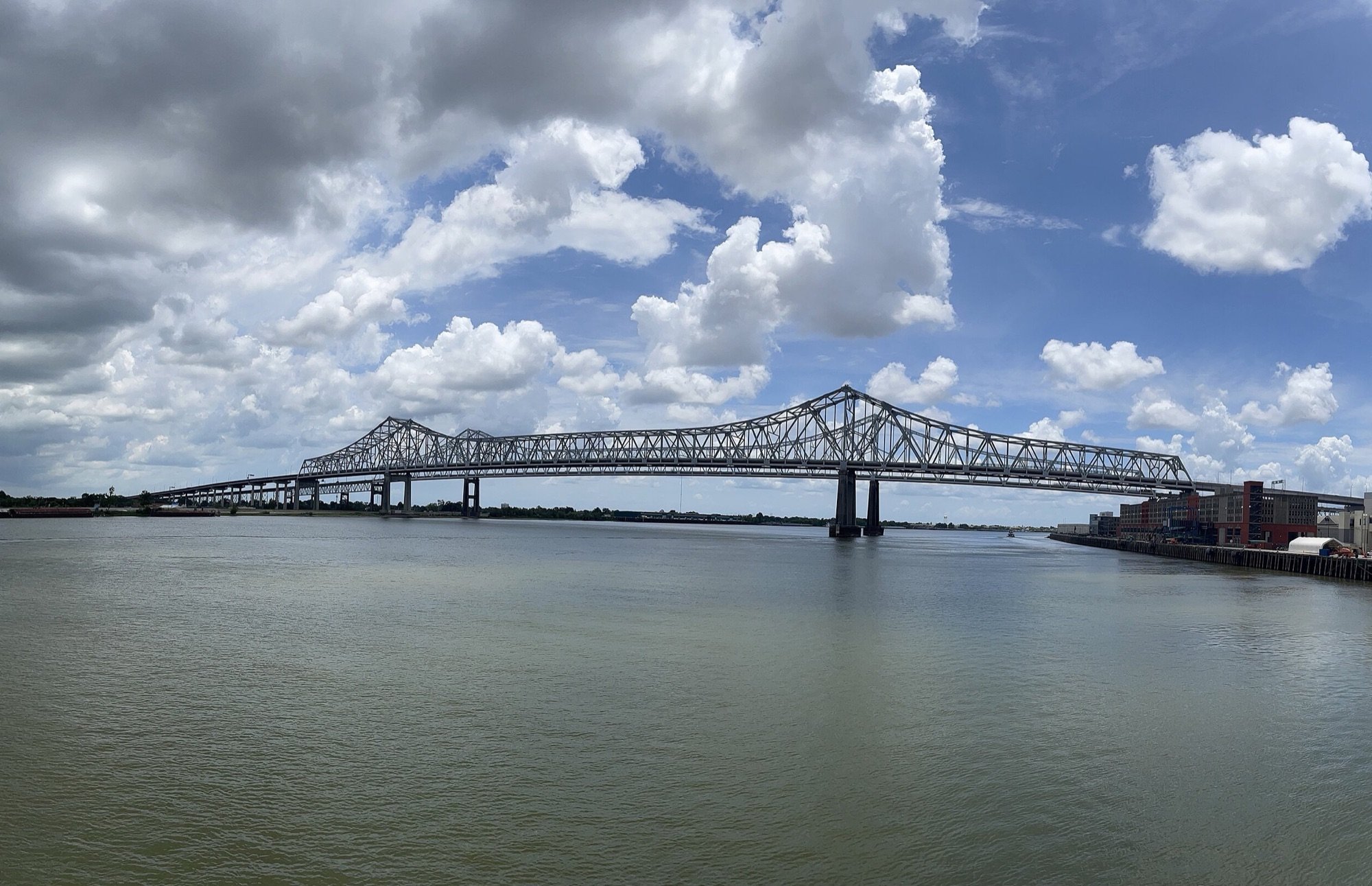
The twin cantilever spans of the Crescent City Connection cross the Mississippi at New Orleans. Photo: Daquella manera / Wikimedia Commons
Driving to New Orleans means crossing water on almost every approach, and the bridge you meet depends on where you start: the I-10 Twin Span from Mississippi, the Lake Pontchartrain Causeway from the Northshore, or an elevated stretch of I-10 past the Bonnet Carré Spillway from Baton Rouge. Here is how each route runs and the history behind the spans.
Our earlier look at Louisiana's famous bridges surveys the state's major river crossings. This guide goes further by starting at your steering wheel: it follows each approach into the city, says what you will pass and adds the dates and engineering claims behind the bridges that matter most.
It also arrives in time for the holiday road-trip season, with Thanksgiving week just ahead. Dates and figures below come from the engineers, owners and agencies named in each section, and conditions on the day are worth checking before you leave.
How do you drive into New Orleans from Baton Rouge, Mississippi or the Northshore?
Most routes end on Interstate 10. From Baton Rouge, I-10 runs east through Gonzales and LaPlace and across the Bonnet Carré Spillway toward Kenner. From the east, I-10 crosses the Pearl River, passes Slidell and crosses Lake Pontchartrain on the Twin Span. From the Northshore, the Causeway lands in Metairie.
- From Baton Rouge: I-10 east passes the I-55 junction at LaPlace, crosses the spillway on its own bridge, and reaches Kenner, where Loyola Drive ramps serve the airport. It then follows the Pontchartrain Expressway into the city.
- From the Mississippi Gulf Coast: I-10 enters Louisiana at the Pearl River. I-59 and I-12 meet it near Slidell, and the Twin Span carries it across the eastern end of Lake Pontchartrain.
- From Jackson and north Mississippi: I-55 enters Louisiana north of Kentwood, passes Hammond and ends at I-10 in LaPlace. Its southern 23 miles run as an elevated roadway across the Manchac swamp.
- From Mandeville and the Northshore: take the Causeway to Metairie, or use I-12 to Slidell and the Twin Span.
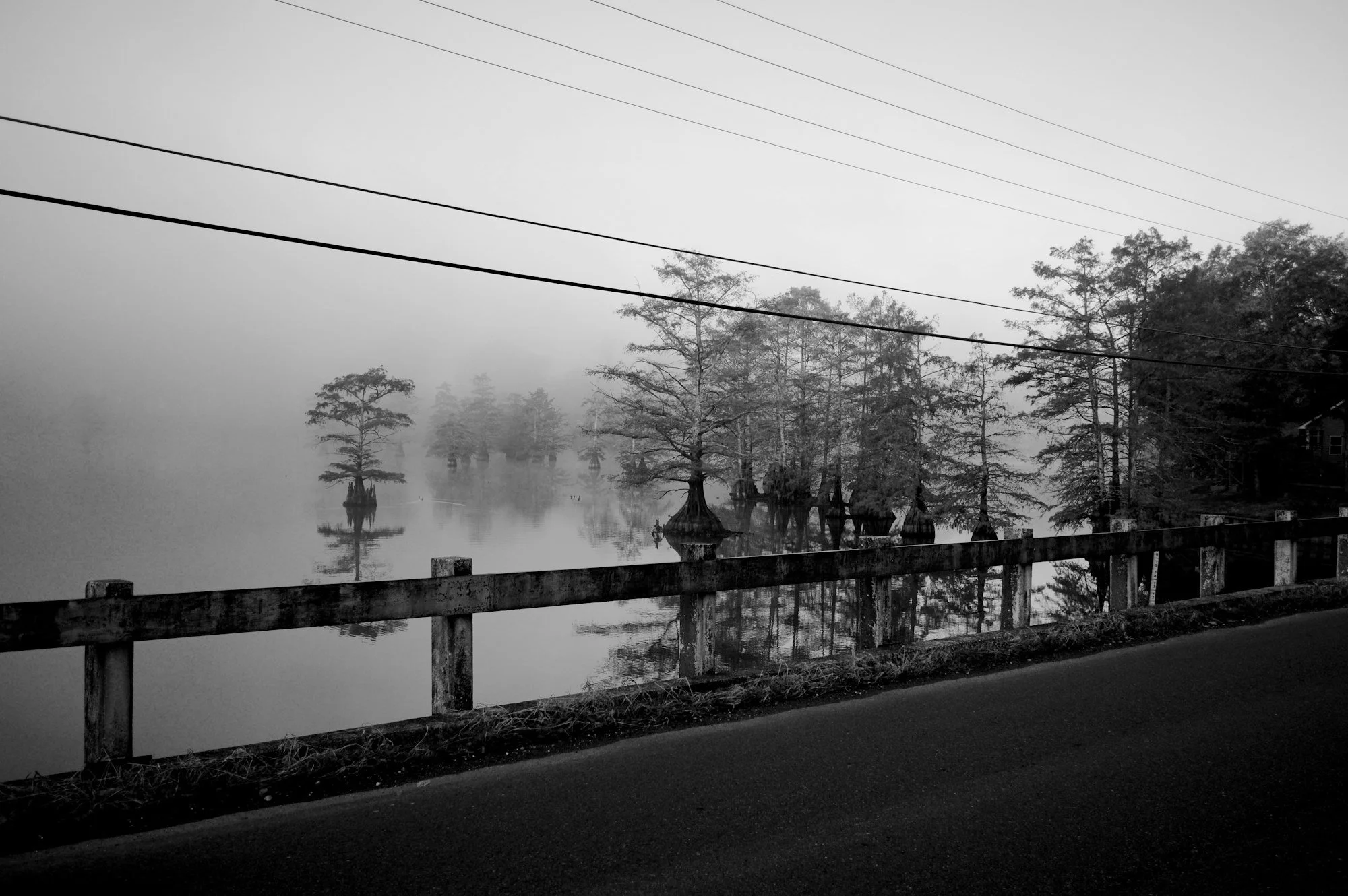
Cypress trees rise from still, foggy water beside a Louisiana road. Photo: Josh Roberie / Unsplash
What is the story behind the bridges over the Mississippi?
The Mississippi bridges matter mostly if you start on the West Bank or follow US 90. The Crescent City Connection opened in 1958 as the Greater New Orleans Bridge, and the Huey P. Long Bridge was completed in 1935. Upriver, the Veterans Memorial Bridge at Gramercy opened in 1995.
Crescent City Connection (1958 and 1988)
The first span opened on April 15, 1958, as the Greater New Orleans Bridge. Its engineers, Modjeski & Masters, say it was officially the longest cantilever highway bridge in the world at the time, with a main span of 1,575 feet. The second span opened on September 30, 1988, and a public naming contest produced the name Crescent City Connection in 1989. Together the spans link the East Bank and West Bank.
Huey P. Long Bridge (1935)
The American Society of Civil Engineers (ASCE) says it was the first bridge to span the Mississippi River at New Orleans, and that its railroad portion was the longest high-level railroad bridge in the world at the time. Modjeski, Masters and Chase designed it. The railroad portion is 22,995 feet and the highway portion 8,076 feet. A widening finished in 2013 gave the highway three lanes each way beside two rail tracks, and it carries US 90.
Veterans Memorial Bridge, Gramercy (1995)
This cantilever truss carries LA 3213 over the river from Gramercy in St. James Parish to St. John the Baptist Parish, about 3,101 feet from end to end. It matters to travelers on the River Road, not to most visitors on I-10.
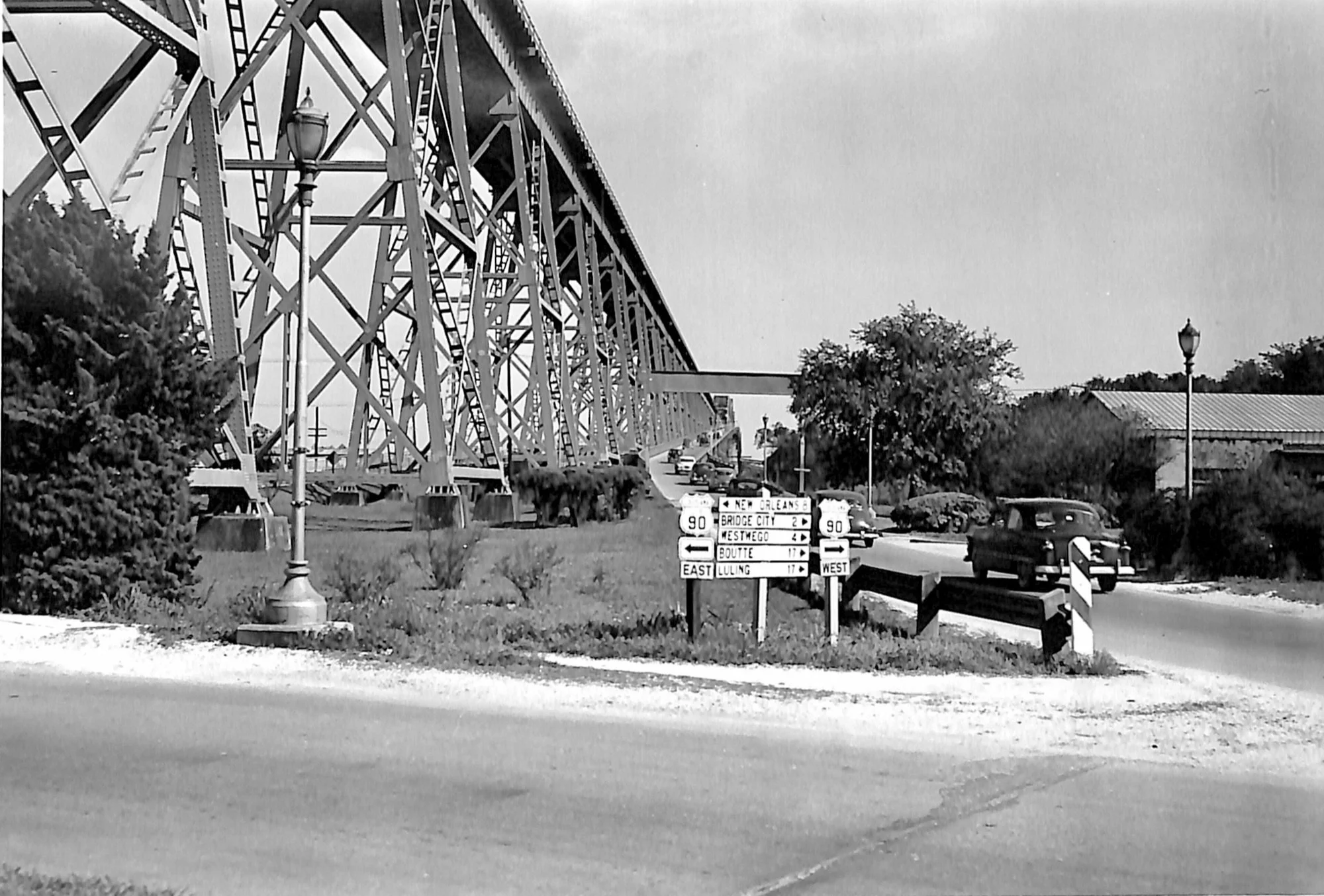
Cars approach the Huey P. Long Bridge in 1951, with US 90 signs pointing toward New Orleans. Photo: T. W. Kines / U.S. Department of Commerce via Wikimedia Commons
Why are the Lake Pontchartrain crossings so unusual?
Two bridges cross Lake Pontchartrain, and both are long by any measure. The Causeway opened in 1956 with a twin following in 1969, and Guinness lists it as the longest continuous bridge over water at 23.87 miles. The I-10 Twin Span, rebuilt as a six-lane bridge in 2011, is the much shorter crossing from Slidell.
Lake Pontchartrain Causeway (1956 and 1969)
The southbound bridge was completed in 1956 and the northbound in 1969, according to the Greater New Orleans Expressway Commission, which owns it. Its homepage headline reads "The Longest Bridge in the World Over Water" and gives the length as 24 miles. Guinness World Records lists "Longest bridge over water (continuous)," at 38.422 km (23.87 miles), joining Mandeville and Metairie. More than 9,000 concrete piles hold it up. The Commission says the seven crossovers between the spans are meant for emergency stopping only.
I-10 Twin Span (1965 and 2011)
The original Twin Span opened in 1965. The state transportation department held the ribbon-cutting for the six-lane replacement on September 8, 2011, with the bridge standing 30 feet above the water and 80 feet of clearance for boats under its high-rise. It runs nearly 5.5 miles and is now officially the Frank Davis "Naturally N'Awlins" Memorial Bridge.
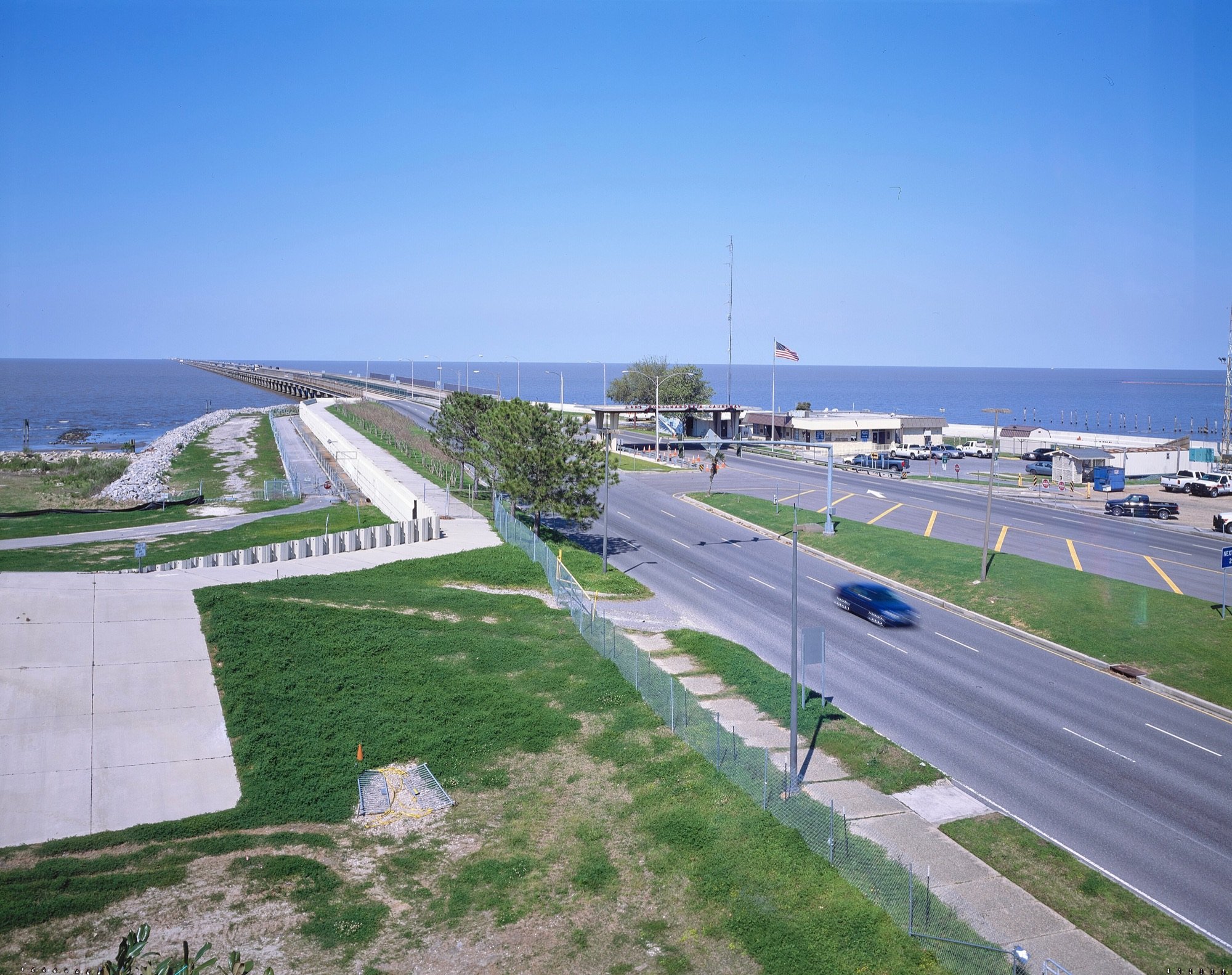
The Causeway runs out across Lake Pontchartrain from its southern end in Metairie. Photo: Terry Greene / HAER via Wikimedia Commons
How do you reach New Orleans without driving?
You do not need a car at all. Louis Armstrong New Orleans International Airport in Kenner is open 24 hours a day, and Amtrak serves Union Passenger Terminal at 1001 Loyola Avenue with the City of New Orleans from Chicago via Memphis and the Crescent from New York.
- By air: the airport's own site lists car rentals, public transportation, a ride app, shuttles and taxis.
- By train: Amtrak also lists the Sunset Limited, three trains a week each way between Louisiana and California, and a Mardi Gras Service along the Gulf Coast to Mobile. Check schedules before you book.
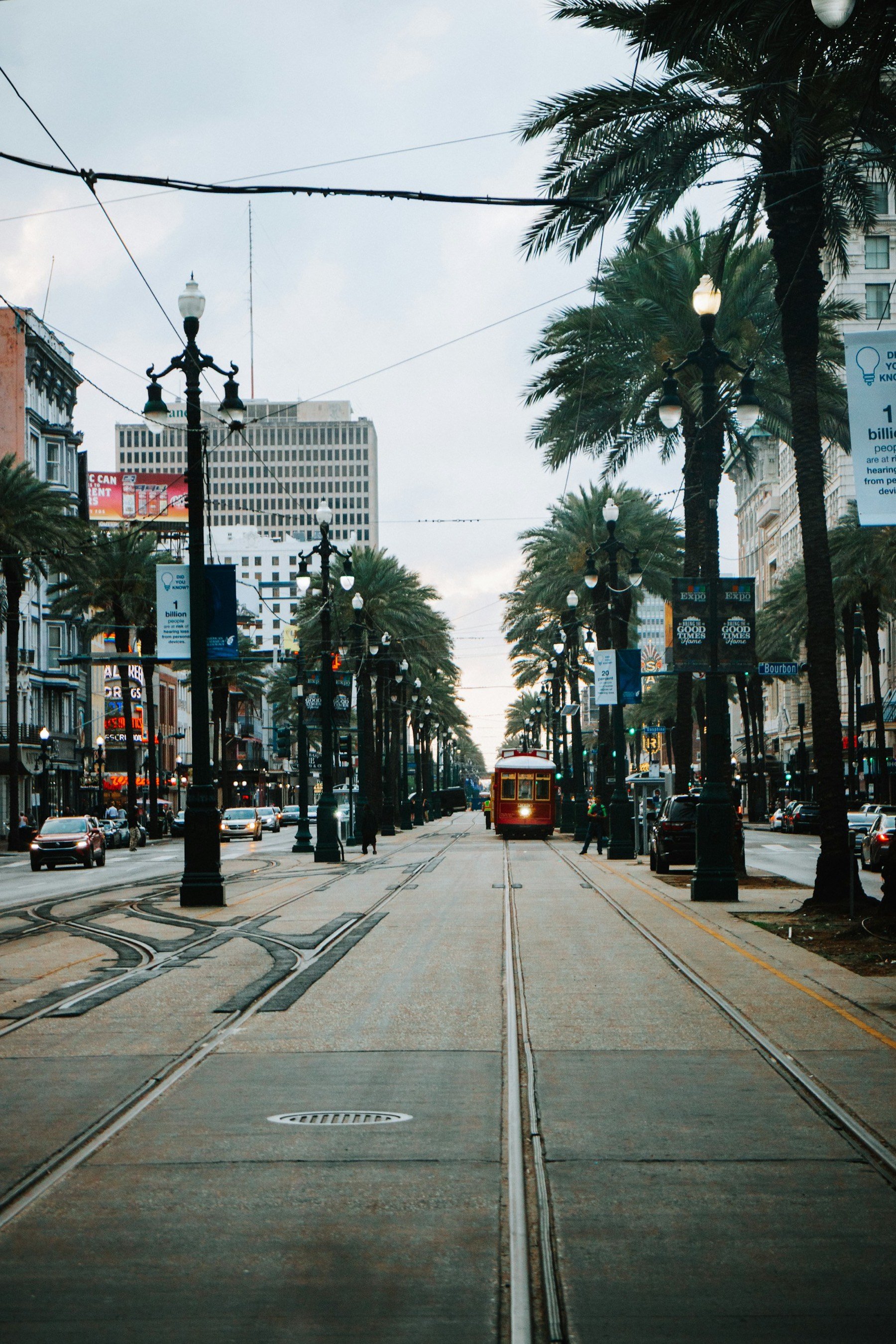
A red streetcar runs down Canal Street between rows of palms, one way to get around without a car. Photo: Dhruvin Pandya / Unsplash
What should you plan for when driving in Thanksgiving week?
Plan around the events as well as the roads. Thursday, November 26 brings the Bayou Classic parade downtown at 3 PM, and Celebration in the Oaks opens November 27. Our Thanksgiving in New Orleans guide lists the dates and where to eat, and the state's 511 service covers road conditions.
Every route above ends in the same city, and the last blocks are a short walk along Esplanade Avenue, the old Creole boulevard at the downriver edge of the French Quarter.
Plan Your Visit
- Pick your route by starting point: I-10 from Baton Rouge and the east, I-55 then I-10 from Jackson, the Causeway or I-12 and the Twin Span from the Northshore.
- Call 511 or visit 511la.org for current road conditions before you leave.
- Confirm Bayou Classic and Celebration in the Oaks times on the organizers' pages, since schedules change.
- Our rooms sleep two to six, and each unit has a kitchenette.
- Walk Esplanade Avenue once you arrive, using our walking guide above.
Frequently Asked Questions
Which bridge do you cross driving to New Orleans from Mississippi? From the Gulf Coast it is the I-10 Twin Span over Lake Pontchartrain. From Jackson, I-55 reaches I-10 at LaPlace after an elevated stretch across the Manchac swamp, with no lake bridge.
Is the Causeway or the Twin Span the way in from the Northshore? Both are used. The Causeway joins Mandeville and Metairie, and the Twin Span carries I-10 between Slidell and New Orleans.
How long is the Lake Pontchartrain Causeway? Guinness lists 23.87 miles. The Commission that runs it gives the length as 24 miles.
When did the first bridge over the Mississippi open at New Orleans? The Huey P. Long Bridge, completed in 1935, was the first, according to the American Society of Civil Engineers. The Greater New Orleans Bridge followed in 1958.
Where can you check road conditions before you leave? Louisiana's 511 service: call 511 or visit 511la.org.
Make the Last Mile of the Drive an Easy One
Every route in this guide ends in a city that began on a bend of the Mississippi. Jean Lafitte House at 613 Esplanade Avenue is an early-1800s Creole building at the edge of the French Quarter, a calm place to put the road behind you.
Every unit has a kitchenette, our rooms sleep two to six, and the courtyard has a pool for the end of a long drive. Book your stay at Jean Lafitte House for your Thanksgiving-week trip.