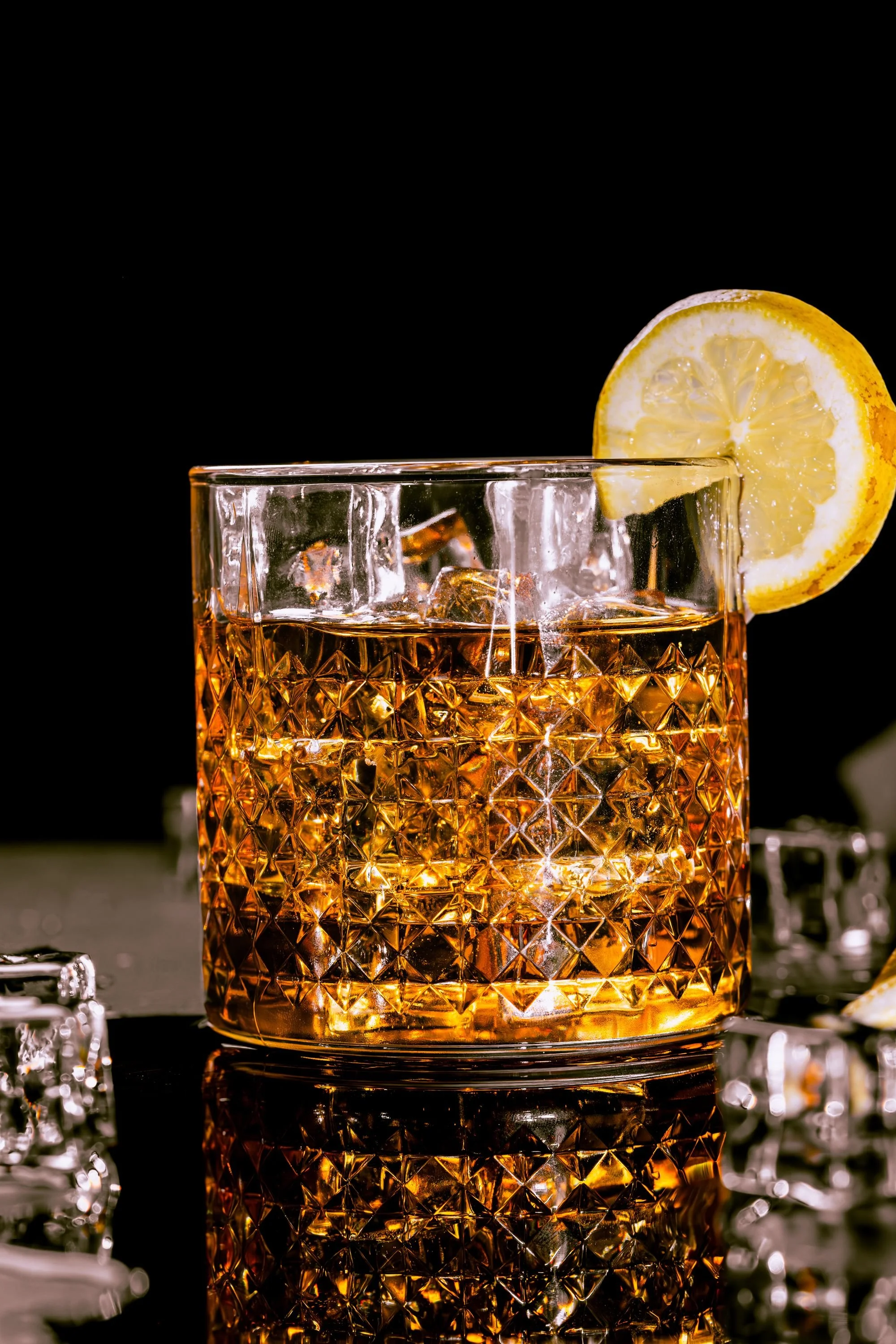
Rye, sugar, Peychaud’s bitters and lemon are the makings. A proper Sazerac is served cold, without ice, with only the peel. Photo: Nano Erdozain / Pexels
The Sazerac is a stirred drink of rye whiskey, sugar and Peychaud's bitters, served in a chilled glass rinsed with absinthe or Herbsaint and finished with a lemon peel, and it has been the official cocktail of the city of New Orleans since Act 928 of 2008. It takes its name from a French cognac that was poured in a coffee house on Exchange Alley in the 1850s, three short blocks from Jackson Square.
Much of what is said about the Sazerac is legend, including the claim that it was the first cocktail in the world. The documented story is better: an apothecary on Royal Street, a brandy importer from Pensacola, a vine blight in France, and a bar at the Roosevelt Hotel that women had to storm.
This post tells that story and ends where it should, with a list of bars within a walk of Esplanade Avenue.
What is a Sazerac?
A Sazerac is rye whiskey, a sugar cube, Peychaud's bitters and a rinse of Herbsaint or absinthe, built in one glass and served in another. The Sazerac House, the Sazerac Company's museum on Canal Street, gives the house method this way:
- Pack one old-fashioned glass with ice to chill it.
- In a second glass, crush a sugar cube with three dashes of Peychaud's bitters.
- Add rye and ice and stir.
- Empty the first glass, coat the inside with a quarter ounce of Herbsaint, and discard the rest.
- Strain the whiskey into the coated glass and garnish with a lemon peel.
No ice in the finished drink, no absinthe beyond what clings to the glass, and nothing but the peel for garnish. Bartenders argue about the peel: the Sazerac House leaves it in; cocktail writers at Punch insist the zest should be expressed over the drink and thrown away. Order one and watch which way your bartender goes.
Did Antoine Peychaud invent the cocktail?
No. Antoine Amédée Peychaud was an apothecary, not a bartender, and the word "cocktail" was in print decades before he opened his shop. The legend is worth knowing because you will hear it in every bar in the Quarter.
The facts first. Peychaud (1803 to 1883) arrived in New Orleans from Saint-Domingue, the French colony that became Haiti, and in 1834 set up an apothecary at 123 Royal Street, the address that is now 437 Royal. He sold bitters, peppermint and alcohol to the city's coffee houses, and by 1857 was advertising his "American Aromatic Bitter Cordial." The city then had more than five hundred coffee houses and exchanges, which were licensed to sell liquor and were the bars of their day, according to the Historic New Orleans Collection.
Now the legend. The story goes that Peychaud served brandy and bitters to friends after hours in a coquetier, a French egg cup, and that American tongues turned "coquetier" into "cocktail." The Southern Foodways Alliance calls the New Orleans origin of the cocktail "a long-held myth." New Orleans Magazine found the word "cocktail" in a Vermont newspaper, the Farmer's Cabinet, in April 1803, thirty-five years before Peychaud's apothecary. Peychaud gave the Sazerac its bitters. He did not give the world the cocktail.
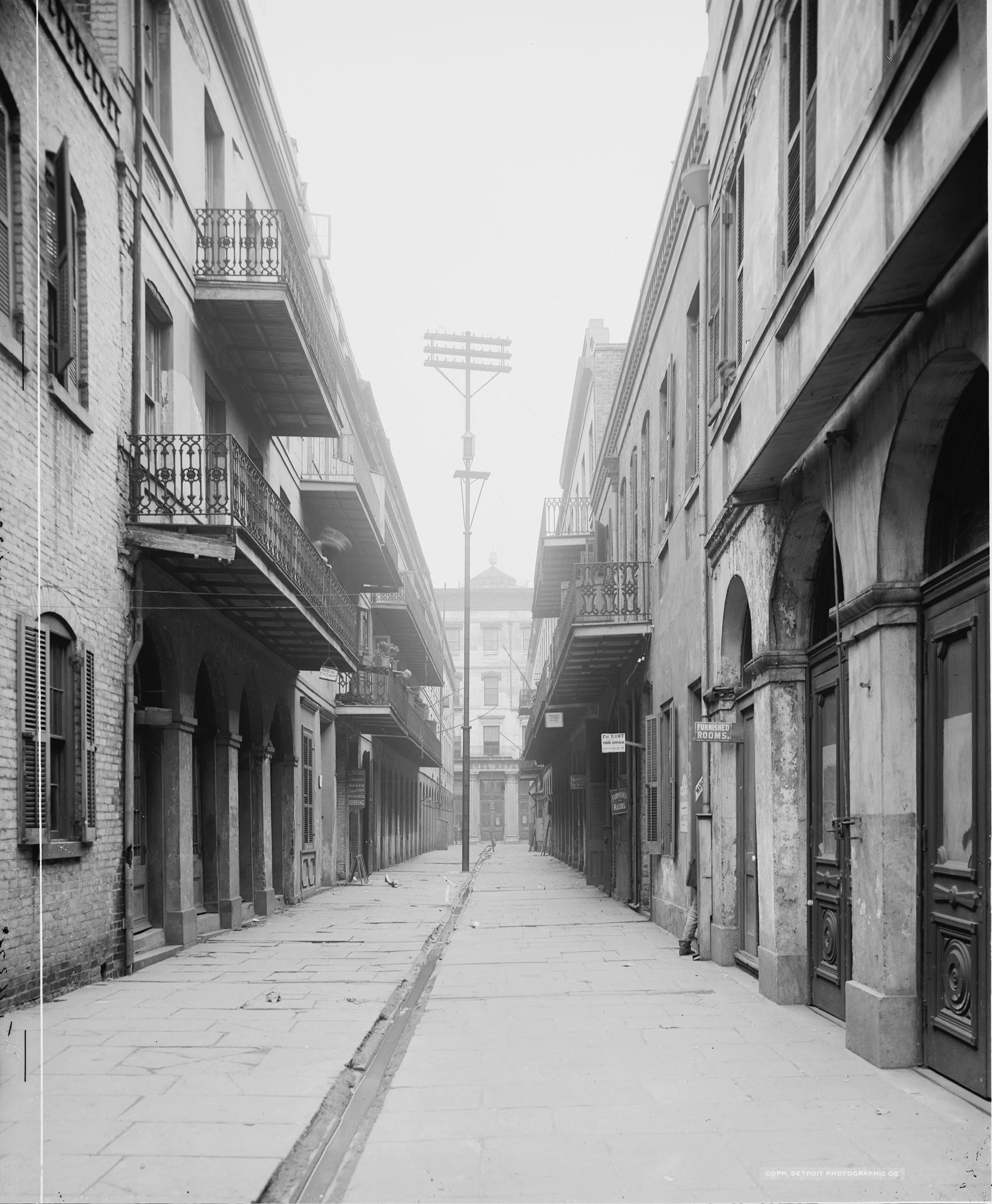
Exchange Alley around 1900. The Sazerac Coffee House stood here beside the Merchants Exchange in the 1850s. Photo: Detroit Publishing Co., public domain
How did the Sazerac get its name?
The Sazerac was named for a cognac, Sazerac de Forge et Fils, and for the coffee house that poured it. Sewell Taylor, a barkeeper who came to New Orleans from Pensacola in 1838, ran the coffee house at the Merchants Exchange on Exchange Alley, then opened a liquor business on Royal Street in 1849 that promoted the Sazerac brandy. Aaron Bird took over the coffee house, renamed it the Sazerac House, and appears in the press under that name by 1852.
Thomas H. Handy went to work there after the Civil War and in 1869 bought the bar with other employees. By 1878 his company also controlled Peychaud's bitters, which is how the bitters and the bar ended up under one roof, and why the Sazerac Company exists today.
Three changes made the drink we know:
- Rye replaced cognac. In the 1880s the phylloxera blight destroyed French vineyards, and replanting took eight to ten years. New Orleans bartenders reached for the Kentucky rye that was plentiful on the docks. Cognac came back around 1900; rye stayed. One caution: the cocktail historian David Wondrich argues the drink was rye from the start, so treat the cognac-first story as the traditional account rather than settled fact.
- Absinthe was banned. The United States outlawed absinthe in 1912, and the ban lasted until 2007. Bars needed a substitute for the rinse.
- Herbsaint was invented. J. Marion Legendre and Reginald Parker created the anise liqueur in New Orleans in 1934, first calling it Legendre's Absinthe until federal objections produced the rearranged name. The Sazerac Company bought Herbsaint from Legendre in 1949.
What happened at the Sazerac Bar in 1949?
On September 26, 1949, a group of New Orleans women walked into the Sazerac Bar at the Roosevelt Hotel and demanded to be served, ending a century in which the bar admitted women only on Mardi Gras Day. The hotel still marks the date each September as the "Stormin' of the Sazerac," and the 2026 edition is set for Friday, September 25.
The bar itself is older than the name. In 1938 the hotel's owner Seymour Weiss commissioned the New York architect Jack Lester to design the main bar, and the painter Paul Ninas, who worked in the city from 1932 until his death in 1964, painted its four-panel mural that same year, according to the Louisiana Endowment for the Humanities. In 1949 Weiss bought the rights to the Sazerac Bar name from its Exchange Alley descendants and brought it uptown to the Roosevelt, where it has stayed. The hotel had opened in 1893 as the Grunewald and took the Roosevelt name in 1923.
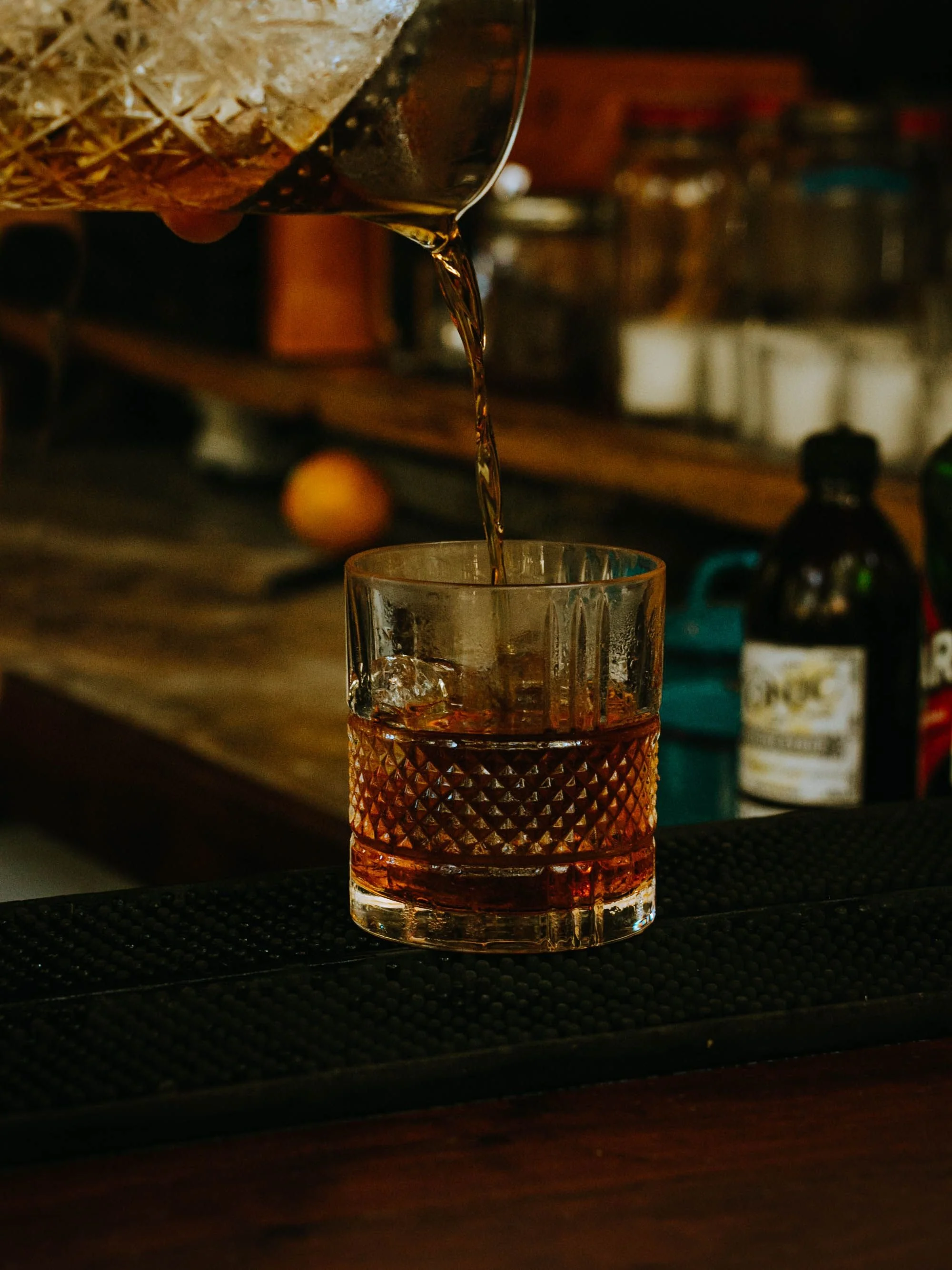
The Sazerac is stirred in one glass and strained into another. Photo: Aarón Lares / Pexels
Where can you drink a Sazerac in the French Quarter today?
Every serious bar in the Quarter makes one, but a few places carry the history with the drink. All were open when we checked in November 2026:
- The Sazerac Bar, The Roosevelt New Orleans, 130 Roosevelt Way. The 1938 room with the Ninas murals, a block off Canal Street at the Quarter's upriver edge.
- The Sazerac House, 101 Magazine Street. The Sazerac Company's three-floor museum at Canal and Magazine, opened in 2019 a few hundred yards from the site of the original coffee house, with a complimentary self-guided tour that includes three cocktail samples for guests over 21, plus a working rye distillery and bitters production.
- Arnaud's French 75 Bar, 813 Bienville Street. The Sazerac on its classics list is rye, Herbsaint, sugar and Peychaud's, which is the right answer.
- Carousel Bar, Hotel Monteleone, 214 Royal Street. The rotating bar has turned since 1949, the same year the women stormed the Sazerac.
- Jewel of the South, 1026 St. Louis Street. A tavern with a cocktail program directed by Chris Hannah, ranked among North America's best bars in 2026.
- Napoleon House, 500 Chartres Street. Run by the Impastato family since 1914 and famous for the Pimm's Cup, but it pours a good Sazerac in a room that looks the part.
Later this winter we will cover Frenchmen Street and Bourbon Street, the two music streets for after dinner, and chicory coffee, the city's other signature pour.
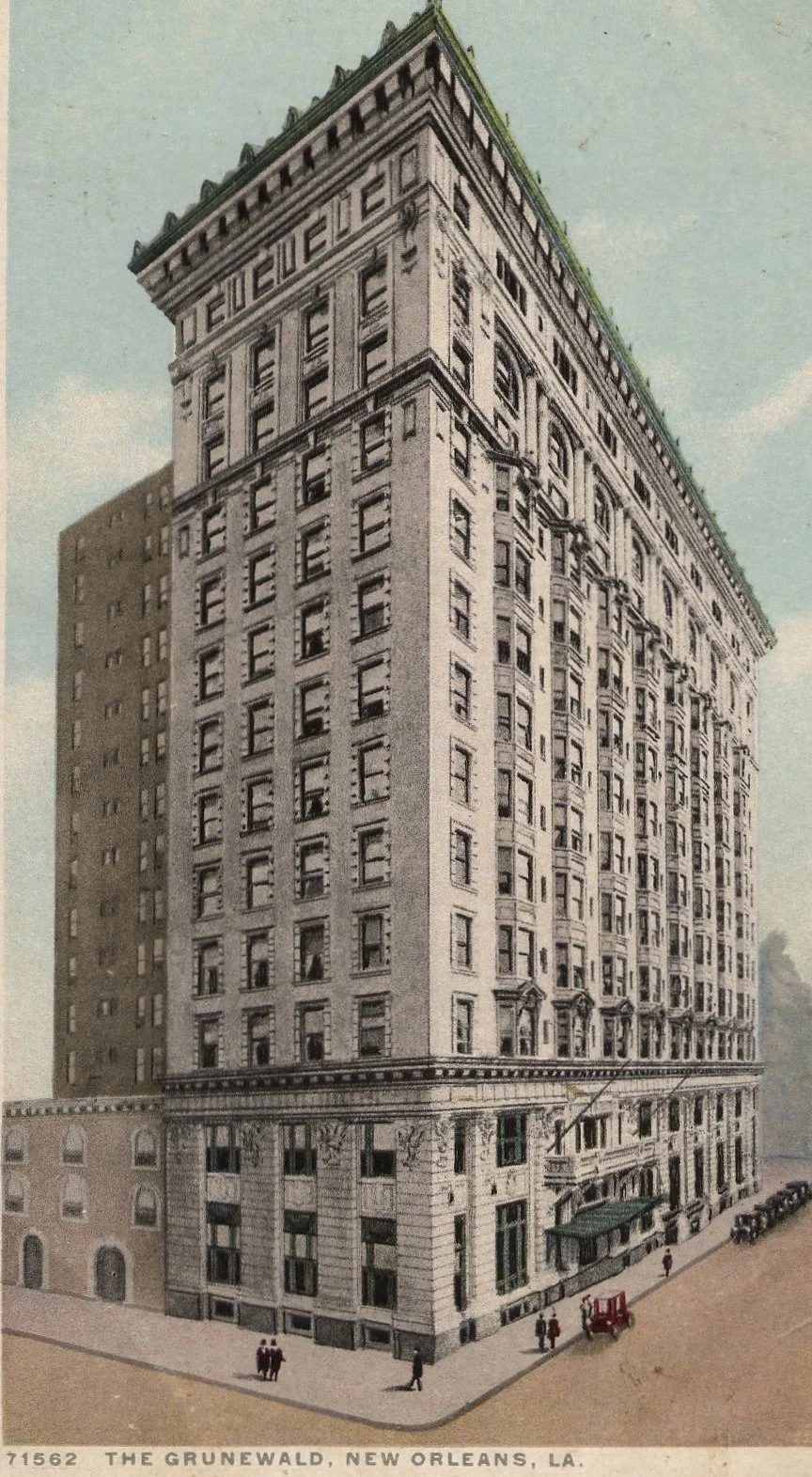
The Grunewald Hotel on a 1910s postcard. It became the Roosevelt in 1923 and the home of the Sazerac Bar in 1949. Postcard: Detroit Publishing Co., public domain
Plan Your Visit
- Reserve the Sazerac House tour online before you go. Entry is free but ticketed, and the tastings are for guests 21 and over.
- Walk Exchange Alley. It runs from Canal Street to Conti Street between Royal and Chartres, and the 1900 view in this post still reads on the ground.
- Order the Sazerac first at any bar, before the ice melts in anything else. It is served without ice and does not wait.
- Ask for it with rye and Herbsaint for the New Orleans version, or with absinthe if you want the pre-1912 rinse.
- Keep the walk short. All six bars above are within about a mile of Esplanade Avenue, and the Quarter's streets after dark are the best part of the evening.
- Pair it with Réveillon in December: several of the dining rooms in our Réveillon dinner guide begin the meal with a Sazerac.
Frequently Asked Questions
What is in a Sazerac? Rye whiskey, a sugar cube, Peychaud's bitters and a rinse of Herbsaint or absinthe in a chilled old-fashioned glass, garnished with a lemon peel and served without ice.
Is the Sazerac the official cocktail of New Orleans? Yes. Act 928 of the 2008 Louisiana Legislature, from a bill by Senator Edwin R. Murray, designated the Sazerac the official cocktail of the city of New Orleans, effective July 15, 2008.
Was the Sazerac the first cocktail? No. The word "cocktail" appears in print in 1803, before Antoine Peychaud opened his Royal Street apothecary in 1834. The Sazerac is one of the oldest named American cocktails, which is claim enough.
Why is a Sazerac made with rye instead of cognac? Tradition holds that the phylloxera blight of the 1880s made cognac scarce and New Orleans bartenders switched to rye. Some historians argue it was rye all along. Either way, rye has been the standard for more than a century.
Where is the Sazerac Bar? Inside The Roosevelt New Orleans at 130 Roosevelt Way, a block from Canal Street. The Sazerac House museum is separate, at 101 Magazine Street.
Walk Home From the Sazerac to Esplanade Avenue
The Sazerac started in a coffee house off Royal Street, and the drink is still served the way the Quarter likes it: cold, strong, no ice, lemon peel. Esplanade Avenue is a straight line from Royal Street, and our rooms are at the quiet end of it.
Jean Lafitte House is an early-1800s Creole building at 613 Esplanade Avenue, with a kitchenette in every unit and a courtyard pool, so a second round can end with a short walk home. Book your stay at Jean Lafitte House.